
Saturday, March 29, 2008

北京奥运 The Beijing Olympics

There has been rising calls from the West for boycotting the Beijing Olympics due to Chinese government’s clashdown of the Riot in Lhasa. The French president Sarkozy even threatened to keep the option open not to show up in the opening ceremony. The base for such discussions, is, as always, China’s violation of human rights in Tibet.

I thought the time for waging ideological war was over, I am apparently wrong. I forgot that people who grew up with required reading of George Orwell’s Animal Farm and later did not read anything else would never get out of such brain-wash or open their eyes to see the completely changed world. The sad situation is that they seem to enjoy all the freedom to think and to speak and proudly believe so but volunterily and automatically take side based on ideology instead of facts and reasoning. Seek truth from facts. This should be the conciense of all journalists, but let me ask how many Western journalists have reported on the riot in Tibet out of such conciense? The double-standard and self-censorship Western media exhibted in reporting this event is astounishing. Please read the Economist correspondant’s report, who was the only foreign journalist that witnessed the event. Read about the Tibetan mobs’ violent burning, looting and attacking people purely because of their ethnic orginin. Which government in the world would sit there and watch this happen? Talking about human rights, how many have compared the life expectancy and child mortality rate in Tibet in 1959 and 2006? Isn’t the right to live the very basic human right?

Indeed, China was a communist nation that had experienced many man-made catastophes. It’s also an oriental nation, with different set of values and way of life from the West. People are inclined to hate something they don’t know or understand. They comdemn instead of trying to learn. But didn’t China and the Chinese government lift the most people out of poverty within the shortest time in history? Isn’t China now shouldering a large part of the world’s growth need and try to handle its challenges domestic and abroad responsibly? For that, China deserves some respect, and Chinese people deserve some pride. I’m sure such pride will be shown in the Beijing Olympics when the world meet in Beijing. It’s a chance for the Chinese to get closer to the world through its openess and hospitality, and vice versa.

When I was in Beijing a month ago, I could feel people’s enthusiam for the Olympics in their everyday life. Can you imagine that in the glove box of every taxi driver on the road of the city is an English phrase book? People of Beijing are waiting for the world, with open hearts. Any reckless threatening of boycotting is not justified. Honestly, I’m not so keen on seeing Sarkozy’s twisted face in the opening ceremony. Of course that’s just some irrational, personal anger of a Chinese, who has the impression that no matter what happens, China is always on the wrong side in the eye of the West.

Friday, March 14, 2008

舞蹈 Dance

我是一个不太容易在公众场合达到忘我境界的人,不太善于跳出自我享受人群中的乐趣,多处于观察者的状态。这也许是为什么我在众人中常常显得温和而安静。

记忆中有两次中了邪。一次刚上小学,上语文课的时候走神儿心里哼起了歌,不知不觉从心里哼到了教室里, 直到老师喊我的名字才醒了。 再一次大学刚刚毕业到外交部工作去军训。一天大家全排队去了食堂,只有我一人落在后面。心里忽然回荡起Yesterday Once More的词曲, 竟震天动地地高歌起来,听到空旷的营房里自己的歌声越发心潮澎湃。此时外交部带队的田老师蓦然出现,我嘎燃而止,脸上起了火。

无论什么性格的人,大概都需要自由抒发内在自我的出口。世上百试不爽始终能迅速带我进入忘我境界的事不多,有一个便是舞蹈。音乐一起,周围一切都隐去,我成了一个崭新空间里的人,从心灵到身体全在音乐里得到了完整自由的释放。无论是“高山流水”的古典柔美,“西班牙斗牛”的热烈狂野,“命运”的起伏挣扎,还是印度“拍球”的活泼顽皮,全都好象开了闸的水,奔涌而出。我相信它们都是我内在性格的一部分,在舞蹈中得以彰显。

忘我其实何等美妙!离开了舞台,在舞蹈中淋漓尽致的时候少了,生命之舞却仍在继续。或许是岁月赋予了更多的成熟和悟性,我好象正在感受到一种力量或是一种召唤,象乐曲般带我进入自由挥洒的空间,随心的节奏而舞,过至情至性的生活。这是人生的舞蹈,相信它比舞台上的更加真实而美丽。

Monday, March 03, 2008

我爱北京 I Love Beijing

让我们荡起双桨
小船儿推开波浪
水中倒映着美丽的白塔
四周环绕着绿树红墙

小船儿轻轻,漂荡在水中
迎面吹来了凉爽的风

这个冬日新春即将来临的一个黄昏,我们走在北海公园的湖畔,夕阳在光滑的柳枝间徐徐降落,无比静谧的一刻,从心中的某个角落飞出了儿时的这首歌,觉着自己好像就是这条小船,漂过了五湖四海,今天漂回到曾经熟悉的红墙碧瓦之间,眼睛热热的潮湿了。几个曲艺艺人从身边经过,对着我打起了快板儿,清脆的声音跳跃着划过正在降临的夜色,我们开心地朗声而笑。

回了张自忠路铁一号的老房子,灰楼长廊下那棵国槐竟还在。我依稀看到一个穿着鲜红色灯芯绒外衣扎着编辫儿的小姑娘在树间的皮筋儿上跳跃,白色的槐花在夏天最后的日子里正发出浓郁的香气...这画面这气味仿若一梦, 却又熟悉得如同昨天。离家多远,走了多久,一瞬间与童年相遇,竟如此温暖。明白了一件事:故乡是永远故乡,即便它面目全非,它却是过去的现实活在我今天和明天的生命中,永不改变。

我爱我的故乡北京。

“Let us swing the oars
See little boats push the waves
In the water is the reflection of the White Pagoda
Around are green trees and red wall

Softly drifting, little boats
Into our face blowing a cool breeze
……”

When the winter was receding and the spring was faintly felt in the air, we came to Beijing. At one serene moment while we were walking in Beihai Park, this childhood song emerged from a secret corner of my heart. Behind the willow branches, the sun was setting. I felt like one of these little boats, drifting across waters and now back into the red wall and emerald tiles once so familiar to me. A few folklore performers passed by and started to recite a joke to us to the rhythm of their bamboo clappers. The crisp sound pierced through the dusk, and we all laughed with joy.

We made it back to my old home decades ago at “Iron No. 1” of Zhangzizhong Road, once the government of a warlord who seized power of Beijing for some time. By the long covered corridor outside my window, the Chinese scholartrees were still standing. Dreamily, I came into a late summer afternoon and saw a little girl in a red corduroy jacket, hair in braids, jumping between two rubber-band strings tied to these scholartrees. The white flowers hung in full blossom, sending forth wafts of strong fragrance… The scene and the scent were as clear and close as yesterday. This sudden encounter with my childhood face to face, even in a twinkling, filled me with tenderness and warmath. Hometown is always there, even it takes on an unrecognisable new appearance. The past is a reality, not just a memory. It will live on in my life today, tomorrow, and never change.

I love my hometown Beijing.

Friday, February 15, 2008

游德散记(2) - 莱茵河畔,历史在现时 Travel Notes from Germany (2) –Along the Rhine: Visible History

The Rhine 的中文名字是”莱茵河”, 这是我所知道的一条河流所能拥有的最美的名字。圣诞期间,我们在莱茵中段驱车徐行, 这段是以两岸众多的城堡和葡萄园著称的浪漫之旅。中国人会很容易陶醉于欧洲的风景,就是在一个萧刹的冬日,在灰蒙蒙的天地间,莱茵河仍然充满诗意和魅力。

然而给我最深的是那么多古迹得以保存并仍是人们日常生活的一部分。人们还生活在草木结构的几百年的老房子里, 教堂的钟仍象中世纪时一样鸣响, 村庄仍象它们最初形成时那样组成了社会生活的最小社群。有人说, 中国文化已经有长足发展的时候,德国人还住在山洞里。不错,可是何处可见这长足发展了的文化呢? 辉煌过去的少数可见印迹早被隔离而大多成为只有付了门票才能参观的“景点儿”,早不在我们每一天的生活里。

我试图理解为什么中国人看起来不太珍惜没有实用价值的老东西,但没有确切的答案。我观察到中国历史的朝代权利更迭常来自于农民起义,总有打碎旧天地创造新世界的意味。另一个观察是在欧洲, 基都教在过去两千年来始终是政治和社会中的一个主要力量, 深深影响了欧洲社群的发展,自然也会一贯的保护许许多多教会自己建设的东西,无论谁是执政者,况且政教合一的情形普遍存在。中国历史没有任何一种宗教曾经成为与国家政权并行或交织的力量。仅一点浅薄的想法。

The Rhine is translated into Chinese as “Lai Yin (莱茵)”. Melodious and picturesque, it is the most beautiful name for a river I’ve ever known. At Christmas time, we made a day out along the middle Rhine, known as the romantic part with many castles and vineyards. European landscape can easily be pleasing to Chinese eyes. Even in a bleak winter day, under grey skies and through grey lands raised on its sides, the Rhine was still poetic and very much inviting.

The most striking to me though is how much historical sites have been preserved and remained in a society’s current life. People still live in wood-clay structured houses of hundreds of years; church bells toll as they did in medieaval times; and villages maintained the way when it was formed as small, basic human communities. It may not be too wrong to say when sophisticated culture had been developed in China, Germans were still dwelling in caves, but where do we see this sophistication of culture in China today? Visible traces of the splendard past are so rare that any of them must be strictly isolated and in most cases become “attractions” accessible only after you pay an entrance fee. They are not part of our life any more.

I’ve been trying to understand why Chinese appear not to appreciate “old things” when they don’t see practical value in them. I have no definite answer. One observation of Chinese history is that the change of power often involoved violent uprise of farmers and destruction of the “old heaven and earth”. Another observation is, Chritianity has been a major power in European politics and society in the past 2000 years. This power consistanly and deeply impacted the development o fcommunities and therefore it has always been there to protect what it has built no matter who were in control of the states. In China, religion has never been a power parallel to or intertwined with the state. Just some thoughts

Thursday, January 24, 2008

游德散记(1) - 马克思的诞生地 Travel Notes from Germany (1) - Birth Place of Karl Marx

距德国与卢森堡边境不远德国一侧的莫索尔河畔有一座小城,名特利亚。据说这是德国最古老的城市, 建于公元前16年。许多人到这里来瞻仰古老历史的遗迹, 而大多数中国人知道特利亚,却是由于另一个原因:这里是伟大革命导师马克思的诞生地。

城中有一所马克思纪念馆,但是除夕闭馆。我很失望,失去了一个发现新的视角去了解我生活中这位特殊人物的机会。有趣的是, 中文与英文和德文并列用在开馆时间和其它通知中,纪念馆附近也有不止一家中餐馆,很明显前来参观的中国人很多。

来这里的中国人一定是与我同龄或年纪更长的。年轻一代少有人知道马克思主义或共产主义是什么,除非马克思的头像印到了人民币钞票上。我发现西方世界对共产主义有刻骨仇恨,常听到“共产党人都应该被枪毙”。他们臆断中国人应该对共产主义有至少同等深刻的仇恨,如果不是更深,我们毕竟在共产主义专政下“悲惨”地生活了几十年。事实远非如此。在大多数人眼中,一个共产党员其实只是他们当中普普通通的一员,而共产主义则是一个为铲除社会的不平而进行的失败的努力,是一个基于对人类本性的错误认识而构筑的永远不会实现的乌托邦,是被一些罪恶少数为撅取权利而利用的意识形态。我认为,罪恶的是这些人,而不是一个谋求改善社会消除阶级的哲学。看一看十九世纪中叶欧洲的社会状况便可相信共产主义思想的诞生绝非偶然。

当我还是一个小女孩儿的时候,马克思是代表绝对真理的神。当然,连伟大领袖毛主席都以他为智慧的源泉。今天,他只是众多哲学家中的一个, 我可以对他的主张进行讨论、质疑甚至批判。在他的墓碑上刻着这样的话: “哲学家总是以各种方式诠释世界, 而关键点却在于如何改变它。马克思确实改变了世界,无论是令其更好,还是更糟。

(德国之行的一些照片在“透过我的镜头”中。)

On the banks of the Moselle River in Germany near its border with Luxemburg sits a small city called Tier. Founded in 16BC, it claims to be the oldest German city. Many people come to see the remains of the ancient past, but most Chinese know about it for a different reason: Tier is the birth place of their grand revolutionary master - Karl Marx.

There is a Marx Museum in town, but on 31st of December, it was closed. I felt quite disappointed losing an opportunity to spot things and dcouments that might have given me a new perspective in understanding such a special figure in my life. Interestingly, Chinese is used side by side with German and English on the museum’s opening hours and other notices. There are Chinese restaurants around too. Obviously many Chinese come.

Chinese visitors must be of my age or older. Younger generations have no idea what Marxism or Communism really is unless a portrait of Marx is put on a RMB note. From remarks like "every communist should be shot dead", I’ve noticed deep hatred against communism in the western world. Under the cummunist reign for decades, Chinese are expected to exhibit at least the same level of hatred if not more due to the “misery” they have gone through. That is simply not the case. In the eyes of most people, a communist was just an ordinary person among themselves; And communism is a failed attempt to correct social inequality, a Utopia that will never come true due to the fundemental flaw in its understanding of human nature, and an ideology that was misused by a small evil group to grab power. To me, what is evil are such people, not a philosoghy in pursuit of a better, more equal, classless society. Given the social circumstances in the mid 19th centuray Europe, I would say the birth of communism was not at all random.

As a little girl, I looked at Marx as if he were a God whose words were to be taken as absolute truth. Of course, he was even Chairman Mao’s fount of ideological wisdom. Now he is just one of the philosophers who sought to find an explanation and a solution to social problems and whose ideas I can challenge, debate, or denounce. On his tomb stone carved the following:

The philosophers have only
interpreted the world in
various ways - the point
however is to change it

In deed, he changed the world. For better, or for worse.

(Some pictures from my recent trip to Germany can be found in Through My Lenses on this blog.)

Wednesday, January 16, 2008

胡志明市街头 On the Streets of Ho Chi Minh City

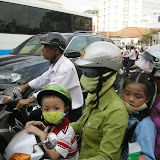
出差去越南胡志明市一天,偷空上街看看。趁出差看一个城市总不免走马观花, 但有点时间走出会议室总是好的。这里与我想象中西贡完全不同, 也没有我喜欢的电影《情人》的故事发生地的影子。除了一些零星的建筑外, 看不到法国殖民地的过去。共产党留下的印迹要强的多。几个快速印象:人们非常友善,温和并且特别年轻,好象50%的人口都在十几岁似的;街上的小摩托车象中国的自行车一样多, 过街的时候我的越南同伴说 “闭上眼睛,过”;接头小贩众多,但从不强卖;整个城市杂乱无章,可是人们却能轻松地找到次序。

上载了一些照片在“透过我的镜头中”。
I stole one hour to stroll along the streets of Ho Chi Minh City during my very brief visit to the city. One can never explore any place on a short business trip, but still, some impression outside conference rooms was nice. It was not the "Saigon" I had in my mind or the backdrop of a favorite movie "Lover". I didn't see much sign of a French colonial past except for some sparing apperance of colonial buildings. The communists have left far stronger marks. A few things I saw: people were very friendly, mild and young (as if 50% of the population are teenagers); scooters were like bycicles in China and to cross any street, as my Vietnamese contact put it - "Just close your eyes and go"; and there were many street vendors but I was never met with a hard sell. The city was chaotic but people found their order in a relaxed way.
To share some snapshots, I uploaded a new album in "Through My Lenses" on this blog.

Saturday, November 17, 2007

Lions for Lambs

Enticed by the participation of Meryl Streep and Robert Redford in it, we went to see Lions for Lambs and were disappointed.

It is a failed attempt of Hollywood to reflect on America's War against Terror. The film starts to give the audience a delusion that it leads somewhere but ends without getting anywhere. Full of long and boring conversations, it says really nothing new but leaves the impression of being preachy, pompous and superficial. One scene was the two wounded American soldiers (formerly political science students who decided to do something meaningful and joined the army to go to Afghanistan) gathered strength to stand up on their feet to be shot dead by Taliban on a snowy plateau. This may have been designed to bring a climax to the movie with the heroism of soldiers in contrast to their commanders' hypocrisy and ruthlessness implied by its title, but it only strikes me as being a joke. Lions for Lambs is neither entertaining nor inspiring. At best, it does weakly presents a trace of a shattered society, which had been permanently feeling well, high, chosen, proud of their WAY OF LIFE, now struck to the heart when they try to force this way of life out of their own border.

I hate to see Redford and Streep's involvement in a low quality production like this, although they performed at their level. Tom Cruise, with his typical fake smile, fits well into his role as a Republican presidential hopeful. Anyways, I don't recommend this movie.

Thursday, October 04, 2007

水上的大鸟 Big Birds over Water

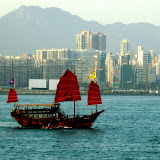
从南丫到中环的渡轮上, 瞥见大鸟般的鱼舟, 觉得很美, 很安宁。 Big fishing birds on the water, seen on a morning ferry from Lamma Island to Central.

Wednesday, October 03, 2007

生如夏花 Life Like Summer Flowers

今年国庆维多利亚港又放烟花。这是我从来看不腻、永远看不腻的。那黑暗夜空中骤然释放的极短暂却极热烈的美,是我在现实中能看到的与梦幻最接近的东西。当辉煌燃尽,浓烈的色彩化为点点星火慢慢消逝,而天空又恢复了夜色中的沉默,我想起我最喜欢的诗人泰戈尔在《飞鸟集》中的两句:“让生如夏花之绚烂,死若秋叶之静美”。

让生如夏花之绚烂,死若秋叶之静美,这正是我想活出的生命。

On the National Day there was firework display in the Victoria Harbour again. I can never get tired of fireworks. The transient but extremely powerful explosion of beauty in the dark evening sky is something in reality that is most close to a dream. When the splendid flame came to an end, the intense colours subsided into twinkling stars before they finally disappeared. Now the sky resumed the colour of the night and the sound of silence. At the moment, I remembered something Tagore wrote in his Stray Birds: “Let life be beautiful like summer flowers, and death like autumn leaves.”

Let life be beautiful like summer flowers, and death like autumn leaves. This is the way of life and death I will live and die.

Tuesday, October 02, 2007

大芬油画村 Dafen Oil Painting Village

深圳没什么可看的,连独特的购物去处也少见,却有一个特别的地方, 大芬油画村。 这是龙岗区一个0.4平方公里左右的社区,据说有5000多个艺术家和画匠栖居于此,开有700来家画廊,主要出售原创油画和复制名画。接近村口时已看到楼上的标语:“艺术与市场在这里对接,才华与财富在这里对换。”

进到社区里,看了摆在店里的作品,大失所望。真是只见市场不见艺术,只见金钱不见才华。满街的店铺满眼的画,却不觉的它们与文化艺术有任何关系,到是与家居装修建材城一类靠得更近。仔细一点,可以看得出大部分作品还是出自训练了多年的手。想想这些曾经怀着热情、憧憬拿起画笔的人,历尽寒窗之苦,练就了一种丰富美好的表达方式,却没有表达的自由,久而久之心里连表达的内容与愿望也消失了。若是他们知道有一天会来到陌生城市的一个小阁楼里,毫无创造性的复制他人作品,或为了迎合市场的低俗品位堆砌些刺眼的青山绿水,他们最初还会选择拿起画笔么?可悲的是,我几乎可以肯定,来到大芬村,丢弃艺术,背叛才华,并不会带来与这种牺牲对等的财富,如果真的存在这样的对等。

我们站在大芬的一间被耀眼日光灯照得象快餐店一样雪亮的所谓画廊前,看到多少梦想在这里破碎。


There is a special place in Shenzhen called Dafen Oil Painting Village. It is a community of 0.4 square kilometres in Longgang District, boasting more than 5,000 artists and close to 700 galleries. This is a base of mass oil painting production in China, exhibiting original work as well as reproduction of master pieces. Approaching the entrance of the community, one can spot a slogan high up on a building: “Here art merges with market; talent brings wealth.”

A stroll through lanes lined with shops of painting only brought great disappointment. Prevalent here was the vulgar of the market that has engulfed artistic talents. Works of paintings piled up like building boards in construction material warehouses, resembling nothing cultural or artistic, although observed more closely, some of these works did tell of the skilful and trained hands that created them. Obviously, many artists who dwell and work in Dafen have gone through rigorous training from very young and acquired the skills that would open rich and beautiful ways of expression. Sadly, the freedom of expression does not naturally come with it, and with the lapse of time, passion of expression also disappears. If they had known that one day they would belocked up in a little corner of a strange city, copying other people's work or producing tasteless chunks of loud colours to meet the market demand, would they have picked up a painting brush in the first place? What's more tragic, I believe strongly, the heavy sacrifice of giving up their artistic yearnings and betraying their own talents will not bring the justifying wealth, if there is such a thing of "justifying wealth" at all.

Standing outside a so-called art gallery lit up like a fast-food restaurant, we had to lament a complete surrender of the purity of art to ruthless commercial pursuit. Dafen Village is, indeed, a village of broken dreams.