




这一天, 我们一同走过并永不会忘却. 我相信并等待历史给它一个应有的名字。
This day we lived and will never forget. I believe history will give it the right name. For that, I wait.
Showing posts with label History. Show all posts
Showing posts with label History. Show all posts
Wednesday, June 04, 2008
今天 Today

Friday, February 15, 2008
游德散记(2) - 莱茵河畔,历史在现时 Travel Notes from Germany (2) –Along the Rhine: Visible History
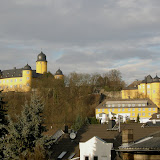
The Rhine 的中文名字是”莱茵河”, 这是我所知道的一条河流所能拥有的最美的名字。圣诞期间,我们在莱茵中段驱车徐行, 这段是以两岸众多的城堡和葡萄园著称的浪漫之旅。中国人会很容易陶醉于欧洲的风景,就是在一个萧刹的冬日,在灰蒙蒙的天地间,莱茵河仍然充满诗意和魅力。
然而给我最深的是那么多古迹得以保存并仍是人们日常生活的一部 分。人们还生活在草木结构的几百年的老房子里, 教堂的钟仍象中世纪时一样鸣响, 村庄仍象它们最初形成时那样组成了社会生活的最小社群。有人说, 中国文化已经有长足发展的时候,德国人还住在山洞里。不错,可是何处可见这长足发展了的文化呢? 辉煌过去的少数可见印迹早被隔离而大多成为只有付了门票才能参观的“景点儿”,早不在我们每一天的生活里。
然而给我最深的是那么多古迹得以保存并仍是人们日常生活的一部
 分。人们还生活在草木结构的几百年的老房子里, 教堂的钟仍象中世纪时一样鸣响, 村庄仍象它们最初形成时那样组成了社会生活的最小社群。有人说, 中国文化已经有长足发展的时候,德国人还住在山洞里。不错,可是何处可见这长足发展了的文化呢? 辉煌过去的少数可见印迹早被隔离而大多成为只有付了门票才能参观的“景点儿”,早不在我们每一天的生活里。
我试图理解为什么中国人看起来不太珍惜没有实用价值的老东西,但没有确切的答案。我观察到中国历史的朝代权利更迭常来自于农民起义,总有打碎旧天地创造新世界的意味。另一个观察是在欧洲, 基都教在过去两千年来始终是政治和社会中的一个主要力量, 深深影响了欧洲社群的发展,自然也会一贯的保护许许多多教会自己建设的东西,无论谁是执政者,况且政教合一的情形普遍存在。中国历史没有任何一种宗教曾经成为与国家政权并行或交织的力量。仅一点浅薄的想法。
 The Rhine is translated into Chinese as “Lai Yin (莱茵)”. Melodious and picturesque, it is the most beautiful name for a river I’ve ever known. At Christmas time, we made a day out along the middle Rhine, known as the romantic part with many castles and vineyards. European landscape can easily be pleasing to Chinese eyes. Even in a bleak winter day, under grey skies and through grey lands raised on its sides, the Rhine was still poetic and very much inviting.
 The most striking to me though is how much historical sites have been preserved and remained in a society’s current life. People still live in wood-clay structured houses of hundreds of years; church bells toll as they did in medieaval times; and villages maintained the way when it was formed as small, basic human communities. It may not be too wrong to say when sophisticated culture had been developed in China, Germans were still dwelling in caves, but where do we see this sophistication of culture in China today? Visible traces of the splendard past are so rare that any of them must be strictly isolated and in most cases become “attractions” accessible only after you pay an entrance fee. They are not part of our life any more.
I’ve been trying to understand why Chinese appear not to appreciate “old things” when they don’t see practical value in them. I have no definite answer. One observation of Chinese history is that the change of power often involoved violent uprise of farmers and destruction of the “old heaven and earth”. Another observation is, Chritianity has been a major power in European politics and society in the past 2000 years. This power consistanly and deeply impacted the development o fcommunities and therefore it has always been there to protect what it has built no matter who were in control of the states. In China, religion has never been a power parallel to or intertwined with the state. Just some thoughts
Monday, July 09, 2007
往事并不如烟 Past Is Never A Wisp of Smoke
七月七日是卢沟桥事变爆发纪念日。七十年前的这一天,北京南郊日军借口失踪士兵要求进入宛平县城遭拒后炮轰宛平。从此,抗日战争在中国战场全面展开。(历史细节可参看http://en.wikipedia.org/wiki/Marco_Polo_Bridge_Incident)枪炮声粉碎了芦沟晓月的安详与宁静. 此后长达八年之久,“月圆之夜人不归,花香之地无和平。”
最近读已故华裔作家张纯如的《南京大屠杀》(Rape of Nanking),这场二战中鲜为人知的大屠杀发生在卢沟桥事变五个多月后,远东军事法庭的死亡未武装军民人数是二十六万。日方承认屠杀的发生,但不确认数字。(日本官方立场参看 http://www.mofa.go.jp/policy/q_a/faq16.html#q2) 书中揭露的日军暴行实在超出正常人可以想象的范围,我无法描述看到历史图片时的震惊与悲愤。 记起二十几年前我还在读中学时认识了第一个南京人,只比我大几岁,提起日本,只有恨。而到了一两年前,一位北京的密友托我在香港买一架数码相机,特别嘱咐,“不要日本货,好也不要”。我说除了日本货没什么选择了,回答是“看看韩国的吧。” 中国人的反日情节前一阵因种种事件常常成为话题。跟西方的朋友讨论的时候,几乎每次都被问同一个问题:“你只拿日本的态度跟德国比,大跃进和文革中死了多少人,怎么没人要求正式道歉啊?”我说这是应该分别讨论的话题,一个人为的灾难不能成为其他不相关暴行的借口。然而这些现代史上的大灾难,无论发生在哪里,都将人性中的软弱、黑暗、残忍和个体生命之间的彼此践踏暴露到极致。给予一定的环境,即便是平日善良、平和的普通人也会被英雄主义、宗教热情、私欲和权利的追求所充满,或是迫于极端恐惧,犯下连他自己也想象不到的恶行。可怕的是,每一个人心中都有这样的种子。
也许这是我们更应记取的。往事并不如烟。
July 7th was the 70th anniversary of the Marco Polo Bridge (Lugou Bridge) Incident. On this day seventy years ago, the Japanese Army deployed outside Wanping Town in southern  suburb of Beijing requested to enter the town to search for a missing Japanese soldier. When the request was denied, the army started bombarding the town while the infantry with tanks marched across the Bridge. Sino-Japanese War since exploded in full scale. (Refer to http://en.wikipedia.org/wiki/Marco_Polo_Bridge_Incident for details) The war lasted 8 years.
About five months after the incident, Nanking Massacre took place. Iris Chang, in her book Rape of Nanking, referred to the massacre as the unknown holocaust of WWII. International Military Tribunal of the Far East estimated that more than 260,000 noncombatants were systematically raped, tortured and murdered in Nanking. The Japanese government acknowledges the occurrence of the massacre but not the number of lives lost. (Find the Japan's official position at http://www.mofa.go.jp/policy/q_a/faq16.html#q2). The violence, brutality and total disregard for human life exceeds any imagination that can be fostered by a normal human being. The shock, grief and indignation I experienced when I saw the historical pictures were beyond words.
I remember about 20 years ago being a high-school student, I got to know for the first time somebody from Nanking. Just a few years older, he exhibited such hatred when he heard the term “Japan”. Then one or two years ago a friend asked me to buy a digital carema from hong kong but specifically reminded me not to buy Japanese brand even they were better in quality. I asked "what's left except these Japanese brands". The answer was “please try the Korean ones”.
Due to several recent incidents in the Sino-Japanese relation, the anti-Japanese sentiment in China has occasionally become a topic in discussion. I was often challenged by the question, mostly raised by Western friends, “You Chinese only compare the attitude of government of Japan with that of Germany. How come nobody has ever asked for apology and compensation for lives lost during the Great Leap Forward and the Cultural Revolution?” I would say these are separate topics and one man-made disaster should not become the excuse for an un-related atrocity. In retrospect, when I look at all these catastrophes in contemporary world history, regardless of where they took place among which ethnic groups, they all exposed to an extreme extent the weakness, darkness and brutality as part of human nature and the cruelty one individual life exhibits to another. Given certain environment, an average kind and mild person can commit a crime even beyond his own imagination, overwelmed by fear or inspired by heroism, religious passion, or pursuit of self-interest and power. What is horrifying is the seed of this part of human nature exists in each of us.
Perhaps this is what we can learn from the history. Past is never a wisp of smoke.
Subscribe to:
Posts (Atom)


