





Showing posts with label Germany. Show all posts

Friday, February 15, 2008

游德散记(2) - 莱茵河畔,历史在现时 Travel Notes from Germany (2) –Along the Rhine: Visible History

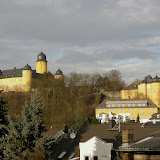
The Rhine 的中文名字是”莱茵河”, 这是我所知道的一条河流所能拥有的最美的名字。圣诞期间,我们在莱茵中段驱车徐行, 这段是以两岸众多的城堡和葡萄园著称的浪漫之旅。中国人会很容易陶醉于欧洲的风景,就是在一个萧刹的冬日,在灰蒙蒙的天地间,莱茵河仍然充满诗意和魅力。

然而给我最深的是那么多古迹得以保存并仍是人们日常生活的一部分。人们还生活在草木结构的几百年的老房子里, 教堂的钟仍象中世纪时一样鸣响, 村庄仍象它们最初形成时那样组成了社会生活的最小社群。有人说, 中国文化已经有长足发展的时候,德国人还住在山洞里。不错,可是何处可见这长足发展了的文化呢? 辉煌过去的少数可见印迹早被隔离而大多成为只有付了门票才能参观的“景点儿”,早不在我们每一天的生活里。

我试图理解为什么中国人看起来不太珍惜没有实用价值的老东西,但没有确切的答案。我观察到中国历史的朝代权利更迭常来自于农民起义,总有打碎旧天地创造新世界的意味。另一个观察是在欧洲, 基都教在过去两千年来始终是政治和社会中的一个主要力量, 深深影响了欧洲社群的发展,自然也会一贯的保护许许多多教会自己建设的东西,无论谁是执政者,况且政教合一的情形普遍存在。中国历史没有任何一种宗教曾经成为与国家政权并行或交织的力量。仅一点浅薄的想法。

The Rhine is translated into Chinese as “Lai Yin (莱茵)”. Melodious and picturesque, it is the most beautiful name for a river I’ve ever known. At Christmas time, we made a day out along the middle Rhine, known as the romantic part with many castles and vineyards. European landscape can easily be pleasing to Chinese eyes. Even in a bleak winter day, under grey skies and through grey lands raised on its sides, the Rhine was still poetic and very much inviting.

The most striking to me though is how much historical sites have been preserved and remained in a society’s current life. People still live in wood-clay structured houses of hundreds of years; church bells toll as they did in medieaval times; and villages maintained the way when it was formed as small, basic human communities. It may not be too wrong to say when sophisticated culture had been developed in China, Germans were still dwelling in caves, but where do we see this sophistication of culture in China today? Visible traces of the splendard past are so rare that any of them must be strictly isolated and in most cases become “attractions” accessible only after you pay an entrance fee. They are not part of our life any more.

I’ve been trying to understand why Chinese appear not to appreciate “old things” when they don’t see practical value in them. I have no definite answer. One observation of Chinese history is that the change of power often involoved violent uprise of farmers and destruction of the “old heaven and earth”. Another observation is, Chritianity has been a major power in European politics and society in the past 2000 years. This power consistanly and deeply impacted the development o fcommunities and therefore it has always been there to protect what it has built no matter who were in control of the states. In China, religion has never been a power parallel to or intertwined with the state. Just some thoughts

Thursday, January 24, 2008

游德散记(1) - 马克思的诞生地 Travel Notes from Germany (1) - Birth Place of Karl Marx

距德国与卢森堡边境不远德国一侧的莫索尔河畔有一座小城,名特利亚。据说这是德国最古老的城市, 建于公元前16年。许多人到这里来瞻仰古老历史的遗迹, 而大多数中国人知道特利亚,却是由于另一个原因:这里是伟大革命导师马克思的诞生地。

城中有一所马克思纪念馆,但是除夕闭馆。我很失望,失去了一个发现新的视角去了解我生活中这位特殊人物的机会。有趣的是, 中文与英文和德文并列用在开馆时间和其它通知中,纪念馆附近也有不止一家中餐馆,很明显前来参观的中国人很多。

来这里的中国人一定是与我同龄或年纪更长的。年轻一代少有人知道马克思主义或共产主义是什么,除非马克思的头像印到了人民币钞票上。我发现西方世界对共产主义有刻骨仇恨,常听到“共产党人都应该被枪毙”。他们臆断中国人应该对共产主义有至少同等深刻的仇恨,如果不是更深,我们毕竟在共产主义专政下“悲惨”地生活了几十年。事实远非如此。在大多数人眼中,一个共产党员其实只是他们当中普普通通的一员,而共产主义则是一个为铲除社会的不平而进行的失败的努力,是一个基于对人类本性的错误认识而构筑的永远不会实现的乌托邦,是被一些罪恶少数为撅取权利而利用的意识形态。我认为,罪恶的是这些人,而不是一个谋求改善社会消除阶级的哲学。看一看十九世纪中叶欧洲的社会状况便可相信共产主义思想的诞生绝非偶然。

当我还是一个小女孩儿的时候,马克思是代表绝对真理的神。当然,连伟大领袖毛主席都以他为智慧的源泉。今天,他只是众多哲学家中的一个, 我可以对他的主张进行讨论、质疑甚至批判。在他的墓碑上刻着这样的话: “哲学家总是以各种方式诠释世界, 而关键点却在于如何改变它。马克思确实改变了世界,无论是令其更好,还是更糟。

(德国之行的一些照片在“透过我的镜头”中。)

On the banks of the Moselle River in Germany near its border with Luxemburg sits a small city called Tier. Founded in 16BC, it claims to be the oldest German city. Many people come to see the remains of the ancient past, but most Chinese know about it for a different reason: Tier is the birth place of their grand revolutionary master - Karl Marx.

There is a Marx Museum in town, but on 31st of December, it was closed. I felt quite disappointed losing an opportunity to spot things and dcouments that might have given me a new perspective in understanding such a special figure in my life. Interestingly, Chinese is used side by side with German and English on the museum’s opening hours and other notices. There are Chinese restaurants around too. Obviously many Chinese come.

Chinese visitors must be of my age or older. Younger generations have no idea what Marxism or Communism really is unless a portrait of Marx is put on a RMB note. From remarks like "every communist should be shot dead", I’ve noticed deep hatred against communism in the western world. Under the cummunist reign for decades, Chinese are expected to exhibit at least the same level of hatred if not more due to the “misery” they have gone through. That is simply not the case. In the eyes of most people, a communist was just an ordinary person among themselves; And communism is a failed attempt to correct social inequality, a Utopia that will never come true due to the fundemental flaw in its understanding of human nature, and an ideology that was misused by a small evil group to grab power. To me, what is evil are such people, not a philosoghy in pursuit of a better, more equal, classless society. Given the social circumstances in the mid 19th centuray Europe, I would say the birth of communism was not at all random.

As a little girl, I looked at Marx as if he were a God whose words were to be taken as absolute truth. Of course, he was even Chairman Mao’s fount of ideological wisdom. Now he is just one of the philosophers who sought to find an explanation and a solution to social problems and whose ideas I can challenge, debate, or denounce. On his tomb stone carved the following:

The philosophers have only
interpreted the world in
various ways - the point
however is to change it

In deed, he changed the world. For better, or for worse.

(Some pictures from my recent trip to Germany can be found in Through My Lenses on this blog.)