
Showing posts with label China. Show all posts

Wednesday, November 19, 2008

甲骨 Oracle Bones

Peter Hessler’s Oracle Bones is so far the best English-language book on contemporary China I’ve read. It helped me, a Chinese, to understand better my people and my country in massive social transformations. Stories of ordinary people are told in a very calm and smooth tone. No dramatic climax, but touching and powerful because of the truthfulness in the very detailed observation and narration of individual lives across generations. Ancient and recent history of China is naturally weaved into the present, all relevant in expressing certain characters of Chinese culture and people that have traveled through time and space, withstanding great changes in their living environment. I would put the book on top of the reading list of everybody who is interested in gaining insight into the Chinese society, but tired of the “Doing Business in China” type that are swamping every book shop in Hong Kong.

In the end of the book, Mr. Hessler quoted the Chinese translation of a few lines from Whitman’s Leaves of Grass, and translated them back into English. Interesting to compare these to Whitman’s original. All irresistible lines.

我,痛苦和欢乐的歌手,今世和来世的统一者,
所有的暗示都接受了下来,加以利用,但又飞速的跃过了这些,
歌唱一件往事。

I, the singer of painful and joyous songs, the uniter
Of this life and the next,
Receiving all silent signs, using them all,
But then leaping across them at full speed,
Sing of the past.

(Whitman’s original:

I, chanter of pains and joys, uniter of here and hereafter,
Taking all hints to use them, but swiftly leaping beyond them,
A reminiscence sing. )

Wednesday, August 13, 2008

灵山 Soul Mountain

在回港的航班上,读完了《灵山》的最后一行文字,转而望向窗外,阳光竟有些刺眼。在这样晴好的日子,从天上望去,香港竟惊人的美丽。在这里生活了五年多,未曾从内心接受过这个城市为家,也从未发现它可以如此之美。如一个永在途中的旅人,我仿佛一直在向着下一个栖息地前行,或是准备前行。

我想去哪里?我在寻觅什么? 在诺贝尔文学奖得主高行健的小说《灵山》中,主人公走在中国西南寻找一个传说中叫灵山的地方。书快结束的时候,他越过了一
条河,觉得离目的地很近了,问路上的一位长者,长者却说:“灵山在河对岸,你越走越远了。” 主人公困惑地问:“我刚从对岸过来啊,如果我从对岸定方向呢?”“还是在河对岸。”长者答。最后,主人公并未到达灵山,而那对他或对我(作为一个读者)都不再重要了。

《灵山》并不是一个故事,而是“我”、“你”、“他”,有时也有“她”的一个旅程,有中国古代、现代的历史,民间传说,叙述者童年的回忆,和旅途中邂逅的种种人物。作者试图在一个极其广阔的文化背景中描述人存在中的一个两难困境:人从独处中获得绝对独立的冲动与从人群中找寻温暖的渴望之间的矛盾。而丰富生命的友情可以威胁个体的完整,无一例外的会在力量的挣扎角逐里告终。

这本书是当代文学的一部罕见作品。我相信它帮助我向生命的真谛又迈进了一步。

When I finished reading the last line of Soul Mountain on a flight back to Hong Kong, I turned my eyes to outside the window. The light almost hurt. On a fine day, Hong Kong looked astonishingly beautiful seen from above. After more than 5 years living here, I’ve never been able to take the city as a home of my heart, and I’ve never realized that it can be so beautiful. Like a wayfarer, I seem to be consistently on the move toward the next destination, or always prepared to.

Where do I want to go? What do I search for? In Soul Mountain, a novel written by Gao Xingjian, a winner of the Nobel prize for literature, the narrator travels through southern and south-western China to search for a legendary place called “Ling Shan (Soul Mountain)”. In the last part of the book, he crossed a river, felt very close to Ling Shan and asked an old man for its location. The old man said “it was on the other side of the river. You are moving farther and farther away.” The narrator got confused and asked: “I’ve already come to this side of the river. What if I use that side to get my bearings?” The old man replied “it’s still on the other side of the river”. In the end, the protagonist did not reach Soul Mountain, but for him and for me as a reader, it appears no longer important.

Soul Mountain is not one story, but a journey of “I”, “You” and “He” and sometimes a “She”, and a collection of ancient and modern Chinese histories, childhood reminiscences, folk tales, and all kinds of people and wanderers encountered on the way. Among many other things, the author tried to deal with “an existential dilemma: man's urge to find the absolute independence granted by solitude conflicts with a longing for the warmth and fellowship which can be given by "the other," be it he or she. At the same time, however, this enriching companionship threatens the individual's integrity and, without fail, ends in some kind of struggle for power.”

This book is a rare work in modern literature. I feel that its transforming power has brought me a step closer to the truth of life. Not an easy one to read, but I recommend it. If possible, read it in Chinese.

Thursday, July 24, 2008

从高处看世界 A View from the Sky


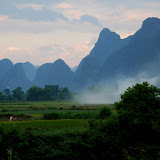
7月21日傍晚,在中国的广西阳朔, 我平生第一次乘上了热气球。刚刚下过雨,太阳光温暖地照向连绵的喀斯特群山 。气球在空气中平稳的徐行,比平静的水面上航行的船只还平稳。在我眼前展现的景象很难言表,却让我心中同时充满安宁与激荡。 这时有一只小手紧紧攥着我的手,试图在每次火焰喷射时得到一点庇护;我回转头时,也有一双微笑的眼睛望着我,我明白身边有另一个心灵正看着和体会着和我一样的东西。

从高出和远处看世界,它会呈现全然不同的景象。这一点我希望我总会记得 。

(阳朔的照片在 “透过我的镜头”中的 “阳朔的夏天”相簿。)


For the first time in my life, I was on a hot air balloon. It was late afternoon on July 21 in Yangshuo, Guangxi province of China. The rain just stopped, and the sun was shining warmly over a vast landscape of Karst hills. The balloon travelled in the air very smoothly, more smoothly than a boat does in calm water. What extended in front of my eyes could not be fully described with words, but it strangely filled my heart with calmness and excitement as the same time. I had a little hand in mine, grabbing me to seek comfort from the occassional burst of fire to create hot air. As I turned around, I saw smiling eyes looking into mine and learned that another soul was seeing and feeling the same things as I was.

The world looks completely different from above and far. This is something I hope I will always remember.

(Pictures of the beautiful landscape in Yangshuo can be found in the album “Summer in Yangshuo” in the section “Through My Lenses” on this blog.)

Wednesday, June 04, 2008

今天 Today

这一天, 我们一同走过并永不会忘却. 我相信并等待历史给它一个应有的名字。

This day we lived and will never forget. I believe history will give it the right name. For that, I wait.

Saturday, May 31, 2008

化蝶 Metamorphosis

从家向后穿过菜田往南丫岛的深处,经大坪村往山上走,有一段可从高处望海的很美的山径,这是我的晨径。进入晨径前是一段葱郁的长路,此时野花缤纷。也是在这一段,每年初夏和晚秋,各色蝴蝶飞舞, 亦真亦幻。

想起儿子在刚会说整句话后不久,有一天忽然问我: “蝴蝶死了以后就变成花了,是吧?”我笑了,说“是,蝴蝶象花一样美,可它小时候是只小肉虫儿。” 蝴蝶的生命,从沉重变轻盈,从丑陋变美丽,从平庸变灿烂,在我心里始终是个奇迹,好象一个绝不可能的梦想的实现。

中国最著名的有关蝴蝶的故事有两则,一是庄周梦蝶, 二是梁祝化蝶。庄周梦蝶讲的是道家的代表人庄子有一天梦到自己变成了一只蝴蝶,醒了之后感觉梦境中的一切如此真实,他问了一个问题:“我是谁? 我是庄周,梦到了蝴蝶,还是蝴蝶的一个梦, 蝴蝶梦到它变成了庄周?”这个故事中所隐含的哲学思想也可延伸至道家对生与死,现实与梦境等人生命题的阐释。梁祝化蝶是相爱的两个人生前被拆散,死后化作蝴蝶破坟而出,随风自由而舞,永远相依。

蝴蝶是中国人的一个梦境,它是自由, 是美, 是灵魂,是爱情,同时却也是死亡,是脆弱,是女人的虚荣和短暂的欢乐; 它的变形是从肉体到灵魂的解脱,从沉重丑陋的现实生活至美丽轻盈的精神世界的升华。而在传统中国文化中,死亡本身就是一种变形,而不是一个终结。

每每置身于这段蝴蝶纷飞的小径,我都有种伸出手去便触到梦的感觉。有时我想,如果我是一条匍匐而行的虫子,用我的一生做交换可以拥有蝴蝶的一天,我会愿意么?变作蝴蝶的我,还会有虫子的记忆么?


In the deeper part of North Lamma Island up to the hills beyond Tai Peng Village, there is a beautiful trail overlooking the sea. This is our Morning Trail. Leading to the entrance of the Morning Trail, a long pass winds through verdant woods and bushes. Now is time for wild flowers and butterflies. Every year in early summer and late autumn, many butterflies of different sizes and colors flutter on one section of this pass, making it almost dream-like.

I remember once being asked by my then two-year-old son: “when a butterfly dies, it changes into a flower, right?” I smiled and said: “yes a butterfly is as beautiful as a flower, but when it was young, it was a caterpillar”. To me, the metamorphosis in a butterfly’s life is an impossible dream that comes true.

In China, there are two most well-known butterfly stories – “Zhuangzi’s Butterfly Dream” and “Butterfly Lovers”.

The first one was about a dream of Zhuangzi, the Taoism philosopher who lived more than 2000 years ago in China. One day he dozed off and dreamed that he turned into a butterfly. When he woke up, the joyful feeling of a butterfly was so real, and he wondered who he actually was. Was he Zhuangzi who dreamed that he was a butterfly or was he the dream of a butterfly who dreamed it was Zhuangzi? The philosophical proposition implied here also extends to the Taoism view on life and death, reality and dream.

The Butterfly Lovers is a legend of the tragic romance between Liang Shanbo and Zhu Yingtai. When their hope of marriage was dashed when Zhu’s parents betrothed Zhu to another man, Liang died of a broken heart. On Zhu’s wedding day, she threw herself against Liang’s tomb. The tomb opened up and enveloped Zhu. Then a pair of butterflies emerged from the tomb and flew high freely and together.

To Chinese, butterflies symbolize freedom, conjugal love, beauty and soul but at the same time death, vulnerability of life, female vanity and transient joy. Its metamorphosis is the extrication from flesh to soul and rise from the heavy, ugly reality to the light and beautiful spiritual world. In traditional Chinese culture, death is anyway not seen as an end, but a metamorphosis into another form of existance.

Every time I walk along the butterfly section before the Morning Trail, I have the feeling that I can raise my hand and touch a dream. A thought often comes to mind. If I were a caterpillar and could exchange my whole life for a day as a butterfly, would I be willing to? When I became a butterfly, would I still carry the memories of a caterpillar?

Wednesday, May 14, 2008

“在泥泞中, 鞭炮声宣告发现了又一具尸体”"Amid the mud, fireworks signal another body"

当我读到《金融时报》头版报道中国四川为震中的7.9级大地震的这个标题时,我的心颤抖了。“每过一会儿,鞭炮声就响起,告诉人们发现了又一具尸体,然后哀号声就又开始了。”稍后又看到南华早报头版的照片,是几个死去的孩子,身体部分掩埋在他们坍塌了的学校的瓦砾碎片中。我整个身体颤抖了,泪不觉涌上来。

我记忆中也有一次地震。32年前这场地震从一个中国北方城市中夺走了二十多万生命。我模糊记得在一个初夏拂晓的黑暗中,有多彩的光在窗外,有碎石摇落的声音,床在晃,爸爸叫醒我们从我家所在的大灰楼往外跑。直到那年深冬,我们才回到这个大灰楼里。全大院儿的人都挤到了车库和外面的空地中,每家在这里支起一、两张
床和蚊帐。我父母后来用各种颜色的塑料布搭起了全大院第一个防震棚,我在周围跑跑跳跳,快乐而自豪。之后一个多月, 妹妹作为一个新生婴儿从医院直接住进了这个塑料的家。 是的, 我用了“快乐”这个词,它的确准确形容了我当时在震后这几个月中作为一个小孩儿的感受 – 无忧无虑,不上学,没人管,尽情游戏,象野猫一样自由……

孩子总是用与大人不同的眼光看世界,而星期一在地震中失去生命的孩子们却再也不能看世界了,他们在世上的最后时光也是充满恐惧。我无法从脑海中抹去躺在碎瓦中那些小小躯体的样子,这也完全改变了我对自己所稍稍经历了的那场地震的感受。准确地说,把灾难后那几个月回忆成一段快乐时光,我深感内疚。

在我写下这些文字的时候,一定有鞭炮声又在响起;在我写下这些文字的时候,我心中只有悲哀。


My heart shivered, when I read this title of Financial Times' front page story on the 7.9 magnitude earthquake on May 12th with its epicentre in China's south-western Sichuan province. "Every so often the crackle of fireworks signalled another body had been found and the wailing began again". Then I spot from SCMP's front page the picture of dead children partly buried in rubbles of their collapsed school building. My whole body started to shiver and tears filled my eyes.

I too have memory of an earthquake, which wiped out 240,000 lives from a northern Chinese city 32 years ago. Vaguely I remember colourful lights, sound of falling rocks and shaking of the bed when my father woke us up in the darkness of an early summer dawn, to escape from our home in a big grey building. Not until deep into the winter did we return. The whole compound crowded into a large garage and the open areas outside it. The space for each family was merely one or two beds with mosquito nets. Then my parents built up the first emergency shelter in the whole compound with plastics of different colours, and I was running around, happy and proud. A month later, my new born younger sister came back from the hospital into this plastic home. Yes, I used the word “happy”, because the word exactly described how I felt for these few post-disaster months as a child - no worry, no pain, no school, less rules, as fun and free as a wild cat... ...

Children always see the world differently from adults, but these children who lost their lives on Monday will never see the world again. I cannot erase the picture of their small bodies lying in the mud, and this has changed how I feel about my own earthquake. Precisely, I feel guilty for remembering it as a happy time.

As I write, fireworks must have crackled again and again; as I write, grief was all I could feel.

Saturday, April 26, 2008

四十而不惑 Year of No Doubts

许多同学朋友在今年踏入或即将踏入不惑之年。中国人没有本土宗教揭示终极真理,所以很少在中国人身上发现传教士情结。对生命与生活的观察常常凝结为生的智慧,主要用于自勉与自省。一个例子,孔夫子将他对人生不同年龄段特点的理解归纳为这样几句话:“吾十有五而志於學,三十而立,四十而不惑,五十而知天命,六十而耳順,七十而从心所欲,不逾矩。”

踏入不惑之年的门坎,我们自问何为“不惑”。我想,不惑应表现为宠辱不惊。因为明了自己生活的追求是什么, 所以不容易为外部环境或他人之言所困惑或左右,在生活的起伏中保持思绪的宁静和平安。心灵从日常的烦扰和焦虑中解放出来,得以看到真正的美,感受真心的爱,捕捉到瞬间的温存,听到自然的低语。

生日不久的一个午后,我静坐在阳台上。刚下了雨,微风吹拂。一只墨色的蝴蝶,尾部各有一个蓝紫色天鹅绒的美丽斑点。她飞落到我们的簕杜鹃树上,在挂着晶亮雨珠的紫花和绿叶间飞舞。我发现自己在这个如梦的景象前微笑,心里感动并无限满足。这时我想也许不惑之年真的来了, 我为此而快乐。

Many friends that went to school with me have recently entered or will soon enter the year of no doubts. Chinese have not an indigenous religion that reveals THE TRUTH and therefore seldom display any missionary passion. Very often observation of life results in intellectual or practical wisdoms and is used for reflection on one's own life. As an example, Confucius put his understanding of the general pattern of different phase of a human life in these words: "At fifteen my heart was set on learning; at thirty I stood firm and independent; at forty I had no more doubts; at fifty I knew the mandate of heaven; at sixty my ear was obedient; at seventy I could follow my heart's desire without transgressing the norm."

At the year of no doubts, we asked ourselves what it is to be "no doubts". To me, it means clarity of what I want out of this life so that I am not easily confused or swayed by external environment or attitude of other people. This leads to peace of mind and calmness in emotion. The heart is freed from distractions and anxiety in order to see the real beauty and feel the true love, in order to catch the tenderness in a transient moment and hear the whispers of nature.

One afternoon shortly after my birthday, I sat on the balcony. The rain just stopped. I saw a black butterfly with strikingly vibrant violet tails land on our Bougainvillea tree, hopping on purple flowers and green leave glistening with rain drops. Moved by this almost dreamy scene, I noticed that I was smiling with a full, contented heart. Perhaps the year of no doubt was really setting in. For that, I was very happy.

Saturday, March 29, 2008

北京奥运 The Beijing Olympics

There has been rising calls from the West for boycotting the Beijing Olympics due to Chinese government’s clashdown of the Riot in Lhasa. The French president Sarkozy even threatened to keep the option open not to show up in the opening ceremony. The base for such discussions, is, as always, China’s violation of human rights in Tibet.

I thought the time for waging ideological war was over, I am apparently wrong. I forgot that people who grew up with required reading of George Orwell’s Animal Farm and later did not read anything else would never get out of such brain-wash or open their eyes to see the completely changed world. The sad situation is that they seem to enjoy all the freedom to think and to speak and proudly believe so but volunterily and automatically take side based on ideology instead of facts and reasoning. Seek truth from facts. This should be the conciense of all journalists, but let me ask how many Western journalists have reported on the riot in Tibet out of such conciense? The double-standard and self-censorship Western media exhibted in reporting this event is astounishing. Please read the Economist correspondant’s report, who was the only foreign journalist that witnessed the event. Read about the Tibetan mobs’ violent burning, looting and attacking people purely because of their ethnic orginin. Which government in the world would sit there and watch this happen? Talking about human rights, how many have compared the life expectancy and child mortality rate in Tibet in 1959 and 2006? Isn’t the right to live the very basic human right?

Indeed, China was a communist nation that had experienced many man-made catastophes. It’s also an oriental nation, with different set of values and way of life from the West. People are inclined to hate something they don’t know or understand. They comdemn instead of trying to learn. But didn’t China and the Chinese government lift the most people out of poverty within the shortest time in history? Isn’t China now shouldering a large part of the world’s growth need and try to handle its challenges domestic and abroad responsibly? For that, China deserves some respect, and Chinese people deserve some pride. I’m sure such pride will be shown in the Beijing Olympics when the world meet in Beijing. It’s a chance for the Chinese to get closer to the world through its openess and hospitality, and vice versa.

When I was in Beijing a month ago, I could feel people’s enthusiam for the Olympics in their everyday life. Can you imagine that in the glove box of every taxi driver on the road of the city is an English phrase book? People of Beijing are waiting for the world, with open hearts. Any reckless threatening of boycotting is not justified. Honestly, I’m not so keen on seeing Sarkozy’s twisted face in the opening ceremony. Of course that’s just some irrational, personal anger of a Chinese, who has the impression that no matter what happens, China is always on the wrong side in the eye of the West.

Friday, February 15, 2008

游德散记(2) - 莱茵河畔,历史在现时 Travel Notes from Germany (2) –Along the Rhine: Visible History

The Rhine 的中文名字是”莱茵河”, 这是我所知道的一条河流所能拥有的最美的名字。圣诞期间,我们在莱茵中段驱车徐行, 这段是以两岸众多的城堡和葡萄园著称的浪漫之旅。中国人会很容易陶醉于欧洲的风景,就是在一个萧刹的冬日,在灰蒙蒙的天地间,莱茵河仍然充满诗意和魅力。

然而给我最深的是那么多古迹得以保存并仍是人们日常生活的一部分。人们还生活在草木结构的几百年的老房子里, 教堂的钟仍象中世纪时一样鸣响, 村庄仍象它们最初形成时那样组成了社会生活的最小社群。有人说, 中国文化已经有长足发展的时候,德国人还住在山洞里。不错,可是何处可见这长足发展了的文化呢? 辉煌过去的少数可见印迹早被隔离而大多成为只有付了门票才能参观的“景点儿”,早不在我们每一天的生活里。

我试图理解为什么中国人看起来不太珍惜没有实用价值的老东西,但没有确切的答案。我观察到中国历史的朝代权利更迭常来自于农民起义,总有打碎旧天地创造新世界的意味。另一个观察是在欧洲, 基都教在过去两千年来始终是政治和社会中的一个主要力量, 深深影响了欧洲社群的发展,自然也会一贯的保护许许多多教会自己建设的东西,无论谁是执政者,况且政教合一的情形普遍存在。中国历史没有任何一种宗教曾经成为与国家政权并行或交织的力量。仅一点浅薄的想法。

The Rhine is translated into Chinese as “Lai Yin (莱茵)”. Melodious and picturesque, it is the most beautiful name for a river I’ve ever known. At Christmas time, we made a day out along the middle Rhine, known as the romantic part with many castles and vineyards. European landscape can easily be pleasing to Chinese eyes. Even in a bleak winter day, under grey skies and through grey lands raised on its sides, the Rhine was still poetic and very much inviting.

The most striking to me though is how much historical sites have been preserved and remained in a society’s current life. People still live in wood-clay structured houses of hundreds of years; church bells toll as they did in medieaval times; and villages maintained the way when it was formed as small, basic human communities. It may not be too wrong to say when sophisticated culture had been developed in China, Germans were still dwelling in caves, but where do we see this sophistication of culture in China today? Visible traces of the splendard past are so rare that any of them must be strictly isolated and in most cases become “attractions” accessible only after you pay an entrance fee. They are not part of our life any more.

I’ve been trying to understand why Chinese appear not to appreciate “old things” when they don’t see practical value in them. I have no definite answer. One observation of Chinese history is that the change of power often involoved violent uprise of farmers and destruction of the “old heaven and earth”. Another observation is, Chritianity has been a major power in European politics and society in the past 2000 years. This power consistanly and deeply impacted the development o fcommunities and therefore it has always been there to protect what it has built no matter who were in control of the states. In China, religion has never been a power parallel to or intertwined with the state. Just some thoughts

Thursday, January 24, 2008

游德散记(1) - 马克思的诞生地 Travel Notes from Germany (1) - Birth Place of Karl Marx

距德国与卢森堡边境不远德国一侧的莫索尔河畔有一座小城,名特利亚。据说这是德国最古老的城市, 建于公元前16年。许多人到这里来瞻仰古老历史的遗迹, 而大多数中国人知道特利亚,却是由于另一个原因:这里是伟大革命导师马克思的诞生地。

城中有一所马克思纪念馆,但是除夕闭馆。我很失望,失去了一个发现新的视角去了解我生活中这位特殊人物的机会。有趣的是, 中文与英文和德文并列用在开馆时间和其它通知中,纪念馆附近也有不止一家中餐馆,很明显前来参观的中国人很多。

来这里的中国人一定是与我同龄或年纪更长的。年轻一代少有人知道马克思主义或共产主义是什么,除非马克思的头像印到了人民币钞票上。我发现西方世界对共产主义有刻骨仇恨,常听到“共产党人都应该被枪毙”。他们臆断中国人应该对共产主义有至少同等深刻的仇恨,如果不是更深,我们毕竟在共产主义专政下“悲惨”地生活了几十年。事实远非如此。在大多数人眼中,一个共产党员其实只是他们当中普普通通的一员,而共产主义则是一个为铲除社会的不平而进行的失败的努力,是一个基于对人类本性的错误认识而构筑的永远不会实现的乌托邦,是被一些罪恶少数为撅取权利而利用的意识形态。我认为,罪恶的是这些人,而不是一个谋求改善社会消除阶级的哲学。看一看十九世纪中叶欧洲的社会状况便可相信共产主义思想的诞生绝非偶然。

当我还是一个小女孩儿的时候,马克思是代表绝对真理的神。当然,连伟大领袖毛主席都以他为智慧的源泉。今天,他只是众多哲学家中的一个, 我可以对他的主张进行讨论、质疑甚至批判。在他的墓碑上刻着这样的话: “哲学家总是以各种方式诠释世界, 而关键点却在于如何改变它。马克思确实改变了世界,无论是令其更好,还是更糟。

(德国之行的一些照片在“透过我的镜头”中。)

On the banks of the Moselle River in Germany near its border with Luxemburg sits a small city called Tier. Founded in 16BC, it claims to be the oldest German city. Many people come to see the remains of the ancient past, but most Chinese know about it for a different reason: Tier is the birth place of their grand revolutionary master - Karl Marx.

There is a Marx Museum in town, but on 31st of December, it was closed. I felt quite disappointed losing an opportunity to spot things and dcouments that might have given me a new perspective in understanding such a special figure in my life. Interestingly, Chinese is used side by side with German and English on the museum’s opening hours and other notices. There are Chinese restaurants around too. Obviously many Chinese come.

Chinese visitors must be of my age or older. Younger generations have no idea what Marxism or Communism really is unless a portrait of Marx is put on a RMB note. From remarks like "every communist should be shot dead", I’ve noticed deep hatred against communism in the western world. Under the cummunist reign for decades, Chinese are expected to exhibit at least the same level of hatred if not more due to the “misery” they have gone through. That is simply not the case. In the eyes of most people, a communist was just an ordinary person among themselves; And communism is a failed attempt to correct social inequality, a Utopia that will never come true due to the fundemental flaw in its understanding of human nature, and an ideology that was misused by a small evil group to grab power. To me, what is evil are such people, not a philosoghy in pursuit of a better, more equal, classless society. Given the social circumstances in the mid 19th centuray Europe, I would say the birth of communism was not at all random.

As a little girl, I looked at Marx as if he were a God whose words were to be taken as absolute truth. Of course, he was even Chairman Mao’s fount of ideological wisdom. Now he is just one of the philosophers who sought to find an explanation and a solution to social problems and whose ideas I can challenge, debate, or denounce. On his tomb stone carved the following:

The philosophers have only
interpreted the world in
various ways - the point
however is to change it

In deed, he changed the world. For better, or for worse.

(Some pictures from my recent trip to Germany can be found in Through My Lenses on this blog.)

Tuesday, October 02, 2007

大芬油画村 Dafen Oil Painting Village

深圳没什么可看的,连独特的购物去处也少见,却有一个特别的地方, 大芬油画村。 这是龙岗区一个0.4平方公里左右的社区,据说有5000多个艺术家和画匠栖居于此,开有700来家画廊,主要出售原创油画和复制名画。接近村口时已看到楼上的标语:“艺术与市场在这里对接,才华与财富在这里对换。”

进到社区里,看了摆在店里的作品,大失所望。真是只见市场不见艺术,只见金钱不见才华。满街的店铺满眼的画,却不觉的它们与文化艺术有任何关系,到是与家居装修建材城一类靠得更近。仔细一点,可以看得出大部分作品还是出自训练了多年的手。想想这些曾经怀着热情、憧憬拿起画笔的人,历尽寒窗之苦,练就了一种丰富美好的表达方式,却没有表达的自由,久而久之心里连表达的内容与愿望也消失了。若是他们知道有一天会来到陌生城市的一个小阁楼里,毫无创造性的复制他人作品,或为了迎合市场的低俗品位堆砌些刺眼的青山绿水,他们最初还会选择拿起画笔么?可悲的是,我几乎可以肯定,来到大芬村,丢弃艺术,背叛才华,并不会带来与这种牺牲对等的财富,如果真的存在这样的对等。

我们站在大芬的一间被耀眼日光灯照得象快餐店一样雪亮的所谓画廊前,看到多少梦想在这里破碎。


There is a special place in Shenzhen called Dafen Oil Painting Village. It is a community of 0.4 square kilometres in Longgang District, boasting more than 5,000 artists and close to 700 galleries. This is a base of mass oil painting production in China, exhibiting original work as well as reproduction of master pieces. Approaching the entrance of the community, one can spot a slogan high up on a building: “Here art merges with market; talent brings wealth.”

A stroll through lanes lined with shops of painting only brought great disappointment. Prevalent here was the vulgar of the market that has engulfed artistic talents. Works of paintings piled up like building boards in construction material warehouses, resembling nothing cultural or artistic, although observed more closely, some of these works did tell of the skilful and trained hands that created them. Obviously, many artists who dwell and work in Dafen have gone through rigorous training from very young and acquired the skills that would open rich and beautiful ways of expression. Sadly, the freedom of expression does not naturally come with it, and with the lapse of time, passion of expression also disappears. If they had known that one day they would belocked up in a little corner of a strange city, copying other people's work or producing tasteless chunks of loud colours to meet the market demand, would they have picked up a painting brush in the first place? What's more tragic, I believe strongly, the heavy sacrifice of giving up their artistic yearnings and betraying their own talents will not bring the justifying wealth, if there is such a thing of "justifying wealth" at all.

Standing outside a so-called art gallery lit up like a fast-food restaurant, we had to lament a complete surrender of the purity of art to ruthless commercial pursuit. Dafen Village is, indeed, a village of broken dreams.

Thursday, August 23, 2007

礼仪之邦的虚名 Chinese Told to Behave

记得刚刚上学的时候老师向我们描述中国是一个什么样的地方, 被重复最多因而也给我印象最深的是"中国是地大物博的文明古国和礼仪之邦"。在认字足够多后,爸爸送了我一套两册的少儿读物《上下五千年》,讲述从黄河流域起源的这个民族的历史变迁和文化传统,更加深了我对这种描述的认同、理解和随之而来的自豪。而对礼仪的具体概念,则是在日常生活的待人接物中, 甚至象吃饭的规矩这种小事中形成的。

孰料今天的中国国民需要政府颁布准则和公约来鼓励最基本的文明行为和礼仪
,真是举世罕见,令人啼笑皆非。随着中国人因其不文明的举止而有望替代美国人成为世界上最不受欢迎的游客,恐怕政府明知这样的准则会遗笑大方,也不可不为了。 准则真是涉及了如何穿衣、说话、吃饭、上厕所,最讲脸面的国人难道不觉得这个丢尽了脸面吗?(内容在http://www.cnta.gov.cn/zhuanti/tssz-mb/zn.asp)也许是怕即便这样,有些人还是不能检讨自己的行为,国家旅游局又煞费苦心地编出了中国公民旅游常见不文明行为(http://www.cnta.gov.cn/zhuanti/tssz-mb/bx.asp), 叹为观止。我看这文件还是永远不要落到外邦人手里为妙,他们已经在质问"中国五千年的文明在哪里"。

看来礼仪之邦已然徒有虚名。走在故乡北京的街头,我感到深深的失落和悲伤,好象失去了一个自己内心珍藏多年的宝贝。一个归宿荡然无存了。礼仪的缺失其实只是表面。我相信只有一个从容、大度、有着笃定生活目的和价值体系的民族才会表现出自己与他人和环境交流时的高尚礼仪,而这都是我们现在所缺失的。传统中国的行为准则基础"仁、义、礼、智、信" 显然已经不是今日中国的行为基础。新加坡前总理李光耀先生曾建议将流行的"中国的崛起"的提法改为"中国的复兴",我想传统文化的复兴应该是中国复兴的核心。何日我们能看到吾国与吾民再次屹立于世界的东方,让全世界不仅看到我们的今天,并从今天看到我们五千年的文明历史?

When I first attended school, teachers tried to describe China to us. The most frequently heard and therefore most remembered description was "China: a nation of vast land and resources, of a long, splendid civilization, and of ceremony and propriety." As I learned enough characters to read, I got a book from my father titled Up & Down the Five Thousand Years. It was a narration of a people originated from the Yellow-River basin, who had witnessed the rise and fall of numerous dynasties and cultivated hundreds of schools of thoughts and philosophies that had combined laid the foundation of a deep cultural heritage. As a young descendant of such a people, I started to grow a strong pride inside. Speaking of propriety, the concept had become specific daily behavioral and moral rules governing everything down to the table manners.

Who would have thought that today, Chinese citizens, descendants the world's longest civilization, have given the government no choice but to publish guidelines to encourage civilized behaviors, even the act would obviously become a joke to the rest of the world. Due to their crude behaviors, Chinese are replacing Americans to become the most unwelcomed tourists internationally. The guidelines touch upon everything including how to dress, talk, eat and use a toilet. (Full text in Chinese at http://www.cnta.gov.cn/zhuanti/tssz-mb/zn.asp). Renowned for saving face by all means, my compatriots, don't you agree that this was a smash right on the face?! Perhaps for the fear that people would not naturally establish any connection between their own behaviorst and these guidelines, the government went on to publish a list of the most common uncivilized behaviors among the Chinese citizens. (Full text in Chinese at http://www.cnta.gov.cn/zhuanti/tssz-mb/zn.asp) I hope this list will never fall into any foreign hands. They are already asking where the five-thousand-year civilization is.

Apparently, little is left but the undeserved reputation. Walking along the small lanes in Beijing - my hometown, I was struck by a deep sadness and disappointment, as if I had lost a treasure long cherished in my heart. A final home to return to had vanished. Absence of decent behaviors is only an expression. Under it is the loss of a calm and magnanimous attitude from a steadfast life goal and strong sense of security. These are what have been taken away from the hearts of the Chinese people over the past century. When commenting on the popular notion of "the Rise of China", Singapore's former prime minister, Lee Kuan Yew, asked:"Why not call it a renaissance, a return to a golden age when poetry, painting, clothes, music and drama flourished?" I do wish someday came the true renaissance of Chinese civilization and today's rise of an economic power lacking cultural and moral underpinning proved to be a painful but necessary prelude.

Tuesday, July 24, 2007

紫禁城里的星巴克 Starbucks in the Forbidden City

一个多星期前,在紫禁城里开了7年的星巴克关了,迫于大众舆论的压力。据说网上几十万人慷慨激昂、各抒己见,很多人认为故宫里开星巴克,是美国的消费文化直挑中国传统文化的底线, 不可容忍。就是星巴克最后连招牌也摘了,静悄悄的卖它的咖啡,也难逃此劫。一个外国平民大众的连锁咖啡馆落户曾经壁垒森严的古老皇家圣地,许多人看着不顺眼,似乎可以理解。毕竟星巴克与故宫是两个太鲜明的符号,很容易挑动一个正在重拾自信的民族的敏感神经,唤起它的集体记忆。

2000年星巴克受邀入驻故宫,虽也有非议之声,但远不及今日受关注的程度。或许人们已经开始从无休止的物欲中抬起了头,从一味崇洋从摆脱出来,开始审视生活中对传统与文化的需要。若果真如此,倒值得庆幸。怕的是对中国文化遗产未知一二,对如今金钱至上诚信全无的社会行为缺乏反思,只求一个脸面。 若是抓住一个并不张扬的星巴克不放,却对同在皇城的喧嚣得多的另一家咖啡店和午门内出售低劣商品的众多摊贩视若无睹,只因他们是自家人,那就有了幼稚的民族主义膨胀之嫌,缺乏泱泱大国的气度了。

About a week ago, Starbucks closed its shop in the Forbidden City in Beijing, submitting to the pressure from hundreds of thousands of Chinese blasting the Internet with protests. People fiercely voiced their intolence of a Starbucks in the Forbidden City. Most argued that such a humiliation to the Chinese cultural heritage lodged by American consumerism should not be allowed. Even in the end Starbucks took down its logo to quietly run its coffee business, it was still not left alone. It is understandable that many people feel uncomfortable about a foreign grassroot coffee chain taking a place in the ultimate royal palace that had been forbidden to all but the royal blood. Afterall, Starbuck and the Forbidden City are each too prominent a symbol, well representing the cultures that have produced them. Easily can they touch the sensitive nerves and trigger the collective memory of a nation that has suffered great humiliations from various foreign attackers in its modern history and of a nation that is regaining a pride and confidence with the brisk pace of economic development and wealth accumulation.

Interestingly, the very Starbucks shop was opened in the Forbidden City in 2000 upon inviation from the Palace Museum located inside. It had been in operation since. Although protests were heard from the start, the scale was far weaker than this time. Encouraging it is, if it sends a signal that more Chinese people are coming out of a restless materialistic pursuit, from a total devotion to getting rich, and from blindly embracing all that's foreign. Still encouraging, if people are starting to realize the important role their cultural heritage takes in their lives. However, when one sees that nobody had a word against another coffee shop inside the City, far more noisy and aggressive, or about the vendors selling subquality, tasteless souveniors along the City's major corridor, just because these are run by our own countrymen, one is inclined to believe that the protest again Starbucks is simply another act of "face-saving", an exhibition of naïve natioanlism that is not founded on a deep understanding of our own culture or on a sincere reflection of the recent social behaviours that had gone too far from such a cultural root.

Friday, July 13, 2007

石头、剪子、布 Rock, Paper, Scissors

中午偷闲到太子大厦的一家书店转转,在满架有关美国总统竞选的书中看到美国前副总统戈尔写的新书 The Assault on Reason。撇开书中对美国政治的分析和对现政府的抨击不谈,有个类比觉得有意思。他说恐惧、理性和信仰的关系就像儿时玩的游戏石头、剪子、布,恐惧破坏理性思维,理性挑战信仰的真实,而信仰征服恐惧心理。

说起石头、剪子、布,还很有几分亲切感,小时候最常用这个来决定某项优先权。无论你出石头、剪子还是布,都有可能赢,结果取决于对方出什么。玩儿着玩儿着,发现还有心理战术,可以根据上一局双方的出招猜测这一局对方最有可能出什么。 后来发现外地小孩儿也玩,然后发现外国人也玩儿。后来在商学院教授解释博奕论的时候,我又想起了这个童年的游戏。

我觉得这个游戏深具中国文化特色,甚至猜测它起源于中国,也确实听说在十九世纪的欧洲作品中提到它时候称之为“一种亚洲的游戏”。中国文化对各种力量之间彼此作用角逐最终达到平衡和谐的独特理解在这个游戏中颇得体现。传统的中国文化似乎不太看
重逻辑思维,所以也就不受A比B强,B比C强,所以A一定比C强这种逻辑的限制,灵活而通融。传统的中国人深谙一物降一物的道理,所以再强也懂得收敛。在中国经济飞速发展财富骤增的今天,在有些人开始忘乎所以忘了天高地厚在巴黎的名牌店里挺着大肚子颐指气使的今天,希望我们还能记起儿时玩过的这个石头、剪子、布的游戏。

Rock, Paper, Scissors

I snatched a moment during lunch break at a bookshop and browsed through a new book written by Al Gore titled The Assault on Reason. One analogy he made reminded me of a childhood game. He said, the relation among fear, reason and faith is similar to that of rock, scissors and paper. Fear displaces reason, reason challenges faith, and faith overcomes fear.

The game “rock, paper, scissors” touched the reminiscences of my younger days, when we used the game for all kinds of random selections. Rock, paper and scissors all had a chance to win, depending on what gesture the opponent decided to make. Having played more, I found the result was not always random because after a few rounds the opponent’s pattern of behaviour could be exploited. Later I found kids from other cities also played the same game, so did kids from other countries. Years later, it reappeared in my mind when I was sitting in the lecture on Game Theory at my business school.


Although played world-wide, this game exhibits a strong flavour of Chinese culture. I even suspect that it originated in China. Did I hear that it was labelled “an Asian game” in the works of European authors from the 19th century? The unique interpretation of rivalry and interaction among various forces and the hope for these forces to enter into a final state of balance and harmony form an important aspect of Chinese culture, quite vividly expressed in this game. It appears that traditional Chinese culture does not emphasis logic thinking, and is beneficially not restrained by the logic such as: A is stronger than B, B is stronger than C, and therefore A must be stronger than C. A traditional Chinese man understands too well that anybody has a natural enemy and can be vanquished; however strong, he always behaves modest and mild. At a time when China is experiencing brisk economic growth and fast accumulation of wealth, and at a time when some people get swollen-headed, forget the height of the heaven and the depth of the earth, I hope we can still remember this game everybody has played in his childhood. Rock defeats scissors, scissors defeat paper, but paper defeats rock.