

Wednesday, October 15, 2008

梦见蝴蝶 I Dreamed of A Butterfly

清晨,我在南丫岛的一片葱绿间行走。明明在岛上,却是一个从未到过的地方,并没有明显的路径,我却很明确方向似地在草丛中前行。最后到了一处灰色的废墟,原本象是一个方正的西式石亭。忽然一只巨大的黑色蝴蝶从身后飞来,先是恍惚的影子,然后就清晰的看见它翅膀上鲜艳的橙色斑点。这蝴蝶落在我的右臂上,安安静静地不走了,我看到它的眼睛望着我。我开始移动脚步离开这个废墟,它仍停在我的右臂上。这时不知从哪里冒一个又黑又瘦的小老头儿,问我:“这是哪一种花精啊?”我开始感到恐惧,用力把蝴蝶甩到地上,它落在草上,却也不飞走…

这时醒了,外面正下着大雨,醒的那一瞬间想着也许这只蝴蝶受了伤, 飞不动了,我为什么没有带它回家,喂它直到好了可以再飞?蝴蝶是吃什么的?…

梦究竟是什么呢? 有些梦会走出黑夜的暗影, 比某些发生过的事还真实,让你在清晰的光线中, 带着一丝困惑,不停回味。

In the first light of the morning, I walked in the green spring landscape on Lamma. This was an area on the island unfamiliar to me. Even without an obvious trail to follow, I seemed to know very well my destination and strode my way through the verdant bushes. In the end, I reached some grey ruins of what looked like a western-style stone pavilion originally. All of a sudden, a giant black butterfly came from behind. First just a faint shadow, then bright orange spots on its wings were sharply in front of my eyes. It landed quietly on my right arm and stayed, no fluttering. I caught sight of its eyes, which were currently gazing at me. I started to move out of the ruins, and the butterfly still clutched on my right arm and wouldn’t leave. At this moment emerged from nowhere a little dark-skinned old man. He approached and asked me: “This is the spirit of what flower?” A chill struck me and I swung my arm very hard, hoping to get rid of the butterfly. It fell onto the grass, still quietly, and didn’t fly away…

By now I was awake. The rain was pouring outside. For an instant, I worried that the butterfly got injured and could not fly any more. Why didn’t I bring it home, take care of it until it flies again? What does a butterfly feed on? …

What on earth is a dream? Some dreams break out of the darkness of night, appear more real than anything that has truly taken place, and push you into a bewilderment that lingers into the broad daylight and refuses to clear up.

Thursday, October 09, 2008

Calorie count on the Menu

Today I read that California became the first American state to require restaurants to display the calorie count of each item on the menu, starting in 2011. This is absurd. Why cannot people simply live by common sense, not by numbers? It is exactly in California where I saw the most calorie conscious people examining labels on everything they put into their shopping carts, yet everyone came to the cashier with carts of foods that can easily reduce the world’s starvation by half. Perhaps it is also the US invention to use “unbiased” terms to refer to fat people as “gravity challenged” or “large and in charge”. What humiliation! I wonder what happened in this world to make us unable to live by the basic rules and principles with which human race has survived for thousands of years.

Below I quote somebody’s obituary to Common Sense.

'Today we mourn the passing of a beloved old friend, Common Sense, who has been with us for many years. No one knows for sure how old he was, since his birth records were long ago lost in bureaucratic red tape. He will be remembered as having cultivated such valuable lessons as:

Knowing when to come in out of the rain; why the early bird gets the worm; Life isn't always fair; and maybe it was my fault.

Common Sense lived by simple, sound financial policies (don't spend more than you can earn) and reliable strategies (adults, not children, are in charge).

His health began to deteriorate rapidly when well-intentioned but overbearing regulations were set in place. Reports of a 6-year-old boy charged with sexual harassment for kissing a classmate; teens suspended from school for using mouthwash after lunch; and a teacher fired for reprimanding an unruly student, only worsened his condition.

Common Sense lost ground when parents attacked teachers for doing the job that they themselves had failed to do in disciplining their unruly children.

Common Sense declined even further when schools were required to get parental consent to administer sun lotion or an Aspirin to a student; but could not inform parents when a student became pregnant and wanted to have an abortion.

Common Sense lost the will to live as the churches became businesses; and criminals received better treatment than their victims.

Common Sense took a beating when you couldn't defend yourself from a burglar in your own home and the burglar could sue you for assault.

Common Sense finally gave up the will to live, after a woman failed to realize that a steaming cup of coffee was hot. She spilled a little in her lap, and was promptly awarded a huge settlement.

Common Sense was preceded in death, by his parents, Truth and Trust, his wife, Discretion, his daughter, Responsibility and his son, Reason. He is survived by his 4 stepbrothers:

I Know My Rights
I Want It Now
Someone Else Is To Blame
I'm A Victim

Not many attended his funeral because so few realized he was gone. If you still remember him, pass this on. If not, join the majority and do nothing ."

Wednesday, August 13, 2008

灵山 Soul Mountain

在回港的航班上,读完了《灵山》的最后一行文字,转而望向窗外,阳光竟有些刺眼。在这样晴好的日子,从天上望去,香港竟惊人的美丽。在这里生活了五年多,未曾从内心接受过这个城市为家,也从未发现它可以如此之美。如一个永在途中的旅人,我仿佛一直在向着下一个栖息地前行,或是准备前行。

我想去哪里?我在寻觅什么? 在诺贝尔文学奖得主高行健的小说《灵山》中,主人公走在中国西南寻找一个传说中叫灵山的地方。书快结束的时候,他越过了一
条河,觉得离目的地很近了,问路上的一位长者,长者却说:“灵山在河对岸,你越走越远了。” 主人公困惑地问:“我刚从对岸过来啊,如果我从对岸定方向呢?”“还是在河对岸。”长者答。最后,主人公并未到达灵山,而那对他或对我(作为一个读者)都不再重要了。

《灵山》并不是一个故事,而是“我”、“你”、“他”,有时也有“她”的一个旅程,有中国古代、现代的历史,民间传说,叙述者童年的回忆,和旅途中邂逅的种种人物。作者试图在一个极其广阔的文化背景中描述人存在中的一个两难困境:人从独处中获得绝对独立的冲动与从人群中找寻温暖的渴望之间的矛盾。而丰富生命的友情可以威胁个体的完整,无一例外的会在力量的挣扎角逐里告终。

这本书是当代文学的一部罕见作品。我相信它帮助我向生命的真谛又迈进了一步。

When I finished reading the last line of Soul Mountain on a flight back to Hong Kong, I turned my eyes to outside the window. The light almost hurt. On a fine day, Hong Kong looked astonishingly beautiful seen from above. After more than 5 years living here, I’ve never been able to take the city as a home of my heart, and I’ve never realized that it can be so beautiful. Like a wayfarer, I seem to be consistently on the move toward the next destination, or always prepared to.

Where do I want to go? What do I search for? In Soul Mountain, a novel written by Gao Xingjian, a winner of the Nobel prize for literature, the narrator travels through southern and south-western China to search for a legendary place called “Ling Shan (Soul Mountain)”. In the last part of the book, he crossed a river, felt very close to Ling Shan and asked an old man for its location. The old man said “it was on the other side of the river. You are moving farther and farther away.” The narrator got confused and asked: “I’ve already come to this side of the river. What if I use that side to get my bearings?” The old man replied “it’s still on the other side of the river”. In the end, the protagonist did not reach Soul Mountain, but for him and for me as a reader, it appears no longer important.

Soul Mountain is not one story, but a journey of “I”, “You” and “He” and sometimes a “She”, and a collection of ancient and modern Chinese histories, childhood reminiscences, folk tales, and all kinds of people and wanderers encountered on the way. Among many other things, the author tried to deal with “an existential dilemma: man's urge to find the absolute independence granted by solitude conflicts with a longing for the warmth and fellowship which can be given by "the other," be it he or she. At the same time, however, this enriching companionship threatens the individual's integrity and, without fail, ends in some kind of struggle for power.”

This book is a rare work in modern literature. I feel that its transforming power has brought me a step closer to the truth of life. Not an easy one to read, but I recommend it. If possible, read it in Chinese.

Thursday, August 07, 2008

In Ho Chi Minh City Again

This week I am in Ho Chi Minh City again.

Never before in a hyper inflationary environment, I was struck by it right after landing. The taxi driver asked for 250,000 Dong to take me to the hotel. Four months ago, I paid 100,000 for the same. Hard feelings developed. The smile on the driver’s face looked tricky and wicked. I felt I was being ripped off by the inflation but more by people who decided to take advantage of it.

They put me in the same room that I stayed in last time, overlooking the Saigon River. It was a soothing view in the darkness. Local English newspaper reported domestic retailers facing the onslaught of international competitors as Vietnam fulfils its promised time-table to open up when entering WTO. A few years ago, this was exactly the language in the Chinese media. China was “feeling the stones to step upon to cross the river”. Its experience may have built a bridge for others who also want to make the cross.

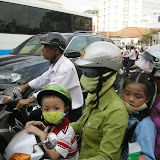
When the sun rose and I merged into the hustle and bustle on the street again, Ho Chi Minh City again became young, friendly, and interesting. I was most amazed by the order people find under a very chaotic surface, especially when Nhung, my Vietnamese colleague, took me on the backseat of her motorbike through traffic from all directions. I thought I would be scared, but I was not, feeling safe and stable instead. It is obviously also a strength of a Chinese to find order in chaos.

At dinner table, without noticing it, I started some efforts to pick up Vietnamese words. The first word was “NGH N”, meaning “thousand”, because it was the smallest local note in my wallet.

Thursday, July 24, 2008

从高处看世界 A View from the Sky


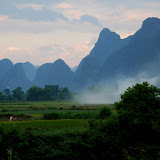
7月21日傍晚,在中国的广西阳朔, 我平生第一次乘上了热气球。刚刚下过雨,太阳光温暖地照向连绵的喀斯特群山 。气球在空气中平稳的徐行,比平静的水面上航行的船只还平稳。在我眼前展现的景象很难言表,却让我心中同时充满安宁与激荡。 这时有一只小手紧紧攥着我的手,试图在每次火焰喷射时得到一点庇护;我回转头时,也有一双微笑的眼睛望着我,我明白身边有另一个心灵正看着和体会着和我一样的东西。

从高出和远处看世界,它会呈现全然不同的景象。这一点我希望我总会记得 。

(阳朔的照片在 “透过我的镜头”中的 “阳朔的夏天”相簿。)


For the first time in my life, I was on a hot air balloon. It was late afternoon on July 21 in Yangshuo, Guangxi province of China. The rain just stopped, and the sun was shining warmly over a vast landscape of Karst hills. The balloon travelled in the air very smoothly, more smoothly than a boat does in calm water. What extended in front of my eyes could not be fully described with words, but it strangely filled my heart with calmness and excitement as the same time. I had a little hand in mine, grabbing me to seek comfort from the occassional burst of fire to create hot air. As I turned around, I saw smiling eyes looking into mine and learned that another soul was seeing and feeling the same things as I was.

The world looks completely different from above and far. This is something I hope I will always remember.

(Pictures of the beautiful landscape in Yangshuo can be found in the album “Summer in Yangshuo” in the section “Through My Lenses” on this blog.)

Wednesday, June 04, 2008

今天 Today

这一天, 我们一同走过并永不会忘却. 我相信并等待历史给它一个应有的名字。

This day we lived and will never forget. I believe history will give it the right name. For that, I wait.

Saturday, May 31, 2008

化蝶 Metamorphosis

从家向后穿过菜田往南丫岛的深处,经大坪村往山上走,有一段可从高处望海的很美的山径,这是我的晨径。进入晨径前是一段葱郁的长路,此时野花缤纷。也是在这一段,每年初夏和晚秋,各色蝴蝶飞舞, 亦真亦幻。

想起儿子在刚会说整句话后不久,有一天忽然问我: “蝴蝶死了以后就变成花了,是吧?”我笑了,说“是,蝴蝶象花一样美,可它小时候是只小肉虫儿。” 蝴蝶的生命,从沉重变轻盈,从丑陋变美丽,从平庸变灿烂,在我心里始终是个奇迹,好象一个绝不可能的梦想的实现。

中国最著名的有关蝴蝶的故事有两则,一是庄周梦蝶, 二是梁祝化蝶。庄周梦蝶讲的是道家的代表人庄子有一天梦到自己变成了一只蝴蝶,醒了之后感觉梦境中的一切如此真实,他问了一个问题:“我是谁? 我是庄周,梦到了蝴蝶,还是蝴蝶的一个梦, 蝴蝶梦到它变成了庄周?”这个故事中所隐含的哲学思想也可延伸至道家对生与死,现实与梦境等人生命题的阐释。梁祝化蝶是相爱的两个人生前被拆散,死后化作蝴蝶破坟而出,随风自由而舞,永远相依。

蝴蝶是中国人的一个梦境,它是自由, 是美, 是灵魂,是爱情,同时却也是死亡,是脆弱,是女人的虚荣和短暂的欢乐; 它的变形是从肉体到灵魂的解脱,从沉重丑陋的现实生活至美丽轻盈的精神世界的升华。而在传统中国文化中,死亡本身就是一种变形,而不是一个终结。

每每置身于这段蝴蝶纷飞的小径,我都有种伸出手去便触到梦的感觉。有时我想,如果我是一条匍匐而行的虫子,用我的一生做交换可以拥有蝴蝶的一天,我会愿意么?变作蝴蝶的我,还会有虫子的记忆么?


In the deeper part of North Lamma Island up to the hills beyond Tai Peng Village, there is a beautiful trail overlooking the sea. This is our Morning Trail. Leading to the entrance of the Morning Trail, a long pass winds through verdant woods and bushes. Now is time for wild flowers and butterflies. Every year in early summer and late autumn, many butterflies of different sizes and colors flutter on one section of this pass, making it almost dream-like.

I remember once being asked by my then two-year-old son: “when a butterfly dies, it changes into a flower, right?” I smiled and said: “yes a butterfly is as beautiful as a flower, but when it was young, it was a caterpillar”. To me, the metamorphosis in a butterfly’s life is an impossible dream that comes true.

In China, there are two most well-known butterfly stories – “Zhuangzi’s Butterfly Dream” and “Butterfly Lovers”.

The first one was about a dream of Zhuangzi, the Taoism philosopher who lived more than 2000 years ago in China. One day he dozed off and dreamed that he turned into a butterfly. When he woke up, the joyful feeling of a butterfly was so real, and he wondered who he actually was. Was he Zhuangzi who dreamed that he was a butterfly or was he the dream of a butterfly who dreamed it was Zhuangzi? The philosophical proposition implied here also extends to the Taoism view on life and death, reality and dream.

The Butterfly Lovers is a legend of the tragic romance between Liang Shanbo and Zhu Yingtai. When their hope of marriage was dashed when Zhu’s parents betrothed Zhu to another man, Liang died of a broken heart. On Zhu’s wedding day, she threw herself against Liang’s tomb. The tomb opened up and enveloped Zhu. Then a pair of butterflies emerged from the tomb and flew high freely and together.

To Chinese, butterflies symbolize freedom, conjugal love, beauty and soul but at the same time death, vulnerability of life, female vanity and transient joy. Its metamorphosis is the extrication from flesh to soul and rise from the heavy, ugly reality to the light and beautiful spiritual world. In traditional Chinese culture, death is anyway not seen as an end, but a metamorphosis into another form of existance.

Every time I walk along the butterfly section before the Morning Trail, I have the feeling that I can raise my hand and touch a dream. A thought often comes to mind. If I were a caterpillar and could exchange my whole life for a day as a butterfly, would I be willing to? When I became a butterfly, would I still carry the memories of a caterpillar?

Wednesday, May 14, 2008

“在泥泞中, 鞭炮声宣告发现了又一具尸体”"Amid the mud, fireworks signal another body"

当我读到《金融时报》头版报道中国四川为震中的7.9级大地震的这个标题时,我的心颤抖了。“每过一会儿,鞭炮声就响起,告诉人们发现了又一具尸体,然后哀号声就又开始了。”稍后又看到南华早报头版的照片,是几个死去的孩子,身体部分掩埋在他们坍塌了的学校的瓦砾碎片中。我整个身体颤抖了,泪不觉涌上来。

我记忆中也有一次地震。32年前这场地震从一个中国北方城市中夺走了二十多万生命。我模糊记得在一个初夏拂晓的黑暗中,有多彩的光在窗外,有碎石摇落的声音,床在晃,爸爸叫醒我们从我家所在的大灰楼往外跑。直到那年深冬,我们才回到这个大灰楼里。全大院儿的人都挤到了车库和外面的空地中,每家在这里支起一、两张
床和蚊帐。我父母后来用各种颜色的塑料布搭起了全大院第一个防震棚,我在周围跑跑跳跳,快乐而自豪。之后一个多月, 妹妹作为一个新生婴儿从医院直接住进了这个塑料的家。 是的, 我用了“快乐”这个词,它的确准确形容了我当时在震后这几个月中作为一个小孩儿的感受 – 无忧无虑,不上学,没人管,尽情游戏,象野猫一样自由……

孩子总是用与大人不同的眼光看世界,而星期一在地震中失去生命的孩子们却再也不能看世界了,他们在世上的最后时光也是充满恐惧。我无法从脑海中抹去躺在碎瓦中那些小小躯体的样子,这也完全改变了我对自己所稍稍经历了的那场地震的感受。准确地说,把灾难后那几个月回忆成一段快乐时光,我深感内疚。

在我写下这些文字的时候,一定有鞭炮声又在响起;在我写下这些文字的时候,我心中只有悲哀。


My heart shivered, when I read this title of Financial Times' front page story on the 7.9 magnitude earthquake on May 12th with its epicentre in China's south-western Sichuan province. "Every so often the crackle of fireworks signalled another body had been found and the wailing began again". Then I spot from SCMP's front page the picture of dead children partly buried in rubbles of their collapsed school building. My whole body started to shiver and tears filled my eyes.

I too have memory of an earthquake, which wiped out 240,000 lives from a northern Chinese city 32 years ago. Vaguely I remember colourful lights, sound of falling rocks and shaking of the bed when my father woke us up in the darkness of an early summer dawn, to escape from our home in a big grey building. Not until deep into the winter did we return. The whole compound crowded into a large garage and the open areas outside it. The space for each family was merely one or two beds with mosquito nets. Then my parents built up the first emergency shelter in the whole compound with plastics of different colours, and I was running around, happy and proud. A month later, my new born younger sister came back from the hospital into this plastic home. Yes, I used the word “happy”, because the word exactly described how I felt for these few post-disaster months as a child - no worry, no pain, no school, less rules, as fun and free as a wild cat... ...

Children always see the world differently from adults, but these children who lost their lives on Monday will never see the world again. I cannot erase the picture of their small bodies lying in the mud, and this has changed how I feel about my own earthquake. Precisely, I feel guilty for remembering it as a happy time.

As I write, fireworks must have crackled again and again; as I write, grief was all I could feel.

Saturday, April 26, 2008

四十而不惑 Year of No Doubts

许多同学朋友在今年踏入或即将踏入不惑之年。中国人没有本土宗教揭示终极真理,所以很少在中国人身上发现传教士情结。对生命与生活的观察常常凝结为生的智慧,主要用于自勉与自省。一个例子,孔夫子将他对人生不同年龄段特点的理解归纳为这样几句话:“吾十有五而志於學,三十而立,四十而不惑,五十而知天命,六十而耳順,七十而从心所欲,不逾矩。”

踏入不惑之年的门坎,我们自问何为“不惑”。我想,不惑应表现为宠辱不惊。因为明了自己生活的追求是什么, 所以不容易为外部环境或他人之言所困惑或左右,在生活的起伏中保持思绪的宁静和平安。心灵从日常的烦扰和焦虑中解放出来,得以看到真正的美,感受真心的爱,捕捉到瞬间的温存,听到自然的低语。

生日不久的一个午后,我静坐在阳台上。刚下了雨,微风吹拂。一只墨色的蝴蝶,尾部各有一个蓝紫色天鹅绒的美丽斑点。她飞落到我们的簕杜鹃树上,在挂着晶亮雨珠的紫花和绿叶间飞舞。我发现自己在这个如梦的景象前微笑,心里感动并无限满足。这时我想也许不惑之年真的来了, 我为此而快乐。

Many friends that went to school with me have recently entered or will soon enter the year of no doubts. Chinese have not an indigenous religion that reveals THE TRUTH and therefore seldom display any missionary passion. Very often observation of life results in intellectual or practical wisdoms and is used for reflection on one's own life. As an example, Confucius put his understanding of the general pattern of different phase of a human life in these words: "At fifteen my heart was set on learning; at thirty I stood firm and independent; at forty I had no more doubts; at fifty I knew the mandate of heaven; at sixty my ear was obedient; at seventy I could follow my heart's desire without transgressing the norm."

At the year of no doubts, we asked ourselves what it is to be "no doubts". To me, it means clarity of what I want out of this life so that I am not easily confused or swayed by external environment or attitude of other people. This leads to peace of mind and calmness in emotion. The heart is freed from distractions and anxiety in order to see the real beauty and feel the true love, in order to catch the tenderness in a transient moment and hear the whispers of nature.

One afternoon shortly after my birthday, I sat on the balcony. The rain just stopped. I saw a black butterfly with strikingly vibrant violet tails land on our Bougainvillea tree, hopping on purple flowers and green leave glistening with rain drops. Moved by this almost dreamy scene, I noticed that I was smiling with a full, contented heart. Perhaps the year of no doubt was really setting in. For that, I was very happy.

Tuesday, April 08, 2008

生命的夏天Life's Summer

我生命的夏天开始的那一瞬间, 以它的色彩、气味和温柔的抚摸常存在我心里, 到永远。
This moment, the moment that started the summer of my life, stays with its color, its smell and its gentle touch in my heart, forever.