
Saturday, November 17, 2007

Lions for Lambs

Enticed by the participation of Meryl Streep and Robert Redford in it, we went to see Lions for Lambs and were disappointed.

It is a failed attempt of Hollywood to reflect on America's War against Terror. The film starts to give the audience a delusion that it leads somewhere but ends without getting anywhere. Full of long and boring conversations, it says really nothing new but leaves the impression of being preachy, pompous and superficial. One scene was the two wounded American soldiers (formerly political science students who decided to do something meaningful and joined the army to go to Afghanistan) gathered strength to stand up on their feet to be shot dead by Taliban on a snowy plateau. This may have been designed to bring a climax to the movie with the heroism of soldiers in contrast to their commanders' hypocrisy and ruthlessness implied by its title, but it only strikes me as being a joke. Lions for Lambs is neither entertaining nor inspiring. At best, it does weakly presents a trace of a shattered society, which had been permanently feeling well, high, chosen, proud of their WAY OF LIFE, now struck to the heart when they try to force this way of life out of their own border.

I hate to see Redford and Streep's involvement in a low quality production like this, although they performed at their level. Tom Cruise, with his typical fake smile, fits well into his role as a Republican presidential hopeful. Anyways, I don't recommend this movie.

Thursday, October 04, 2007

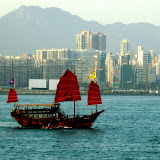
水上的大鸟 Big Birds over Water

从南丫到中环的渡轮上, 瞥见大鸟般的鱼舟, 觉得很美, 很安宁。 Big fishing birds on the water, seen on a morning ferry from Lamma Island to Central.

Wednesday, October 03, 2007

生如夏花 Life Like Summer Flowers

今年国庆维多利亚港又放烟花。这是我从来看不腻、永远看不腻的。那黑暗夜空中骤然释放的极短暂却极热烈的美,是我在现实中能看到的与梦幻最接近的东西。当辉煌燃尽,浓烈的色彩化为点点星火慢慢消逝,而天空又恢复了夜色中的沉默,我想起我最喜欢的诗人泰戈尔在《飞鸟集》中的两句:“让生如夏花之绚烂,死若秋叶之静美”。

让生如夏花之绚烂,死若秋叶之静美,这正是我想活出的生命。

On the National Day there was firework display in the Victoria Harbour again. I can never get tired of fireworks. The transient but extremely powerful explosion of beauty in the dark evening sky is something in reality that is most close to a dream. When the splendid flame came to an end, the intense colours subsided into twinkling stars before they finally disappeared. Now the sky resumed the colour of the night and the sound of silence. At the moment, I remembered something Tagore wrote in his Stray Birds: “Let life be beautiful like summer flowers, and death like autumn leaves.”

Let life be beautiful like summer flowers, and death like autumn leaves. This is the way of life and death I will live and die.

Tuesday, October 02, 2007

大芬油画村 Dafen Oil Painting Village

深圳没什么可看的,连独特的购物去处也少见,却有一个特别的地方, 大芬油画村。 这是龙岗区一个0.4平方公里左右的社区,据说有5000多个艺术家和画匠栖居于此,开有700来家画廊,主要出售原创油画和复制名画。接近村口时已看到楼上的标语:“艺术与市场在这里对接,才华与财富在这里对换。”

进到社区里,看了摆在店里的作品,大失所望。真是只见市场不见艺术,只见金钱不见才华。满街的店铺满眼的画,却不觉的它们与文化艺术有任何关系,到是与家居装修建材城一类靠得更近。仔细一点,可以看得出大部分作品还是出自训练了多年的手。想想这些曾经怀着热情、憧憬拿起画笔的人,历尽寒窗之苦,练就了一种丰富美好的表达方式,却没有表达的自由,久而久之心里连表达的内容与愿望也消失了。若是他们知道有一天会来到陌生城市的一个小阁楼里,毫无创造性的复制他人作品,或为了迎合市场的低俗品位堆砌些刺眼的青山绿水,他们最初还会选择拿起画笔么?可悲的是,我几乎可以肯定,来到大芬村,丢弃艺术,背叛才华,并不会带来与这种牺牲对等的财富,如果真的存在这样的对等。

我们站在大芬的一间被耀眼日光灯照得象快餐店一样雪亮的所谓画廊前,看到多少梦想在这里破碎。


There is a special place in Shenzhen called Dafen Oil Painting Village. It is a community of 0.4 square kilometres in Longgang District, boasting more than 5,000 artists and close to 700 galleries. This is a base of mass oil painting production in China, exhibiting original work as well as reproduction of master pieces. Approaching the entrance of the community, one can spot a slogan high up on a building: “Here art merges with market; talent brings wealth.”

A stroll through lanes lined with shops of painting only brought great disappointment. Prevalent here was the vulgar of the market that has engulfed artistic talents. Works of paintings piled up like building boards in construction material warehouses, resembling nothing cultural or artistic, although observed more closely, some of these works did tell of the skilful and trained hands that created them. Obviously, many artists who dwell and work in Dafen have gone through rigorous training from very young and acquired the skills that would open rich and beautiful ways of expression. Sadly, the freedom of expression does not naturally come with it, and with the lapse of time, passion of expression also disappears. If they had known that one day they would belocked up in a little corner of a strange city, copying other people's work or producing tasteless chunks of loud colours to meet the market demand, would they have picked up a painting brush in the first place? What's more tragic, I believe strongly, the heavy sacrifice of giving up their artistic yearnings and betraying their own talents will not bring the justifying wealth, if there is such a thing of "justifying wealth" at all.

Standing outside a so-called art gallery lit up like a fast-food restaurant, we had to lament a complete surrender of the purity of art to ruthless commercial pursuit. Dafen Village is, indeed, a village of broken dreams.

Saturday, September 22, 2007

画、歌声和四川菜 Paintings, Singing & Sichuan Kitchen

又去了香港著名的私房菜”四川菜大平伙”,上次去还是在两年前了。那时很喜欢这里,布置不俗,菜好。丈夫招呼客人,太太掌勺。墙上的画和女主人饭后的献声,告诉人们他们的艺术背景,显出了与一般食府的不同。

这次去感觉变了。菜还是原来的菜,一样的好味道,不知为什么没了原来的红火劲儿;画还是原来的画,黑白旧照仍是太太年轻时的美丽容颜,却充满逝者如斯的伤感;最后女主人走出厨房由丈夫一一介绍给食客,两个人脸上都是充满疲惫的笑容,友善却无奈而强求。而令人最不人闻不忍顾的还是太太最后的歌。唱的是“茉莉花”,本是轻松的江南小调,她唱的声音和表情真如杜鹃啼血,起调之高太难为自己了。我断定在座的没有一个听得舒服,却也没有一个忍心跟她说“这最后一道免了吧”。满屋的过去,都是死的记忆,恐怕只有这几分钟是最后一个坚守的角落,艺术的过去今天就只活在这几分钟。

艺术与生存总是一个令人徒生感慨的话题。宁愿不食人间烟火的艺术家们为了活也要吃饭。开了餐馆的,还要给别人做饭吃。起初恐怕还有赚钱支持自己艺术追求的愿望,但日复一日年复一年的在菜场厨房度过,艺术的热情和天赋在日出日落间不知不觉的消失了。过去的梦再也无法带入未来,却又不愿彻底忘却,就有了这让人听着伤心的歌。为了她这个最后的角落,我还是会去“大平伙”,并且会坐到最后,为她鼓掌。

Monday, September 10, 2007

宁静的清晨 Peaceful Morning


周日的早晨, 南丫还未完全从沉睡中醒来. Sunday Morning. Lamma is still half asleep.

Thursday, August 23, 2007

礼仪之邦的虚名 Chinese Told to Behave

记得刚刚上学的时候老师向我们描述中国是一个什么样的地方, 被重复最多因而也给我印象最深的是"中国是地大物博的文明古国和礼仪之邦"。在认字足够多后,爸爸送了我一套两册的少儿读物《上下五千年》,讲述从黄河流域起源的这个民族的历史变迁和文化传统,更加深了我对这种描述的认同、理解和随之而来的自豪。而对礼仪的具体概念,则是在日常生活的待人接物中, 甚至象吃饭的规矩这种小事中形成的。

孰料今天的中国国民需要政府颁布准则和公约来鼓励最基本的文明行为和礼仪
,真是举世罕见,令人啼笑皆非。随着中国人因其不文明的举止而有望替代美国人成为世界上最不受欢迎的游客,恐怕政府明知这样的准则会遗笑大方,也不可不为了。 准则真是涉及了如何穿衣、说话、吃饭、上厕所,最讲脸面的国人难道不觉得这个丢尽了脸面吗?(内容在http://www.cnta.gov.cn/zhuanti/tssz-mb/zn.asp)也许是怕即便这样,有些人还是不能检讨自己的行为,国家旅游局又煞费苦心地编出了中国公民旅游常见不文明行为(http://www.cnta.gov.cn/zhuanti/tssz-mb/bx.asp), 叹为观止。我看这文件还是永远不要落到外邦人手里为妙,他们已经在质问"中国五千年的文明在哪里"。

看来礼仪之邦已然徒有虚名。走在故乡北京的街头,我感到深深的失落和悲伤,好象失去了一个自己内心珍藏多年的宝贝。一个归宿荡然无存了。礼仪的缺失其实只是表面。我相信只有一个从容、大度、有着笃定生活目的和价值体系的民族才会表现出自己与他人和环境交流时的高尚礼仪,而这都是我们现在所缺失的。传统中国的行为准则基础"仁、义、礼、智、信" 显然已经不是今日中国的行为基础。新加坡前总理李光耀先生曾建议将流行的"中国的崛起"的提法改为"中国的复兴",我想传统文化的复兴应该是中国复兴的核心。何日我们能看到吾国与吾民再次屹立于世界的东方,让全世界不仅看到我们的今天,并从今天看到我们五千年的文明历史?

When I first attended school, teachers tried to describe China to us. The most frequently heard and therefore most remembered description was "China: a nation of vast land and resources, of a long, splendid civilization, and of ceremony and propriety." As I learned enough characters to read, I got a book from my father titled Up & Down the Five Thousand Years. It was a narration of a people originated from the Yellow-River basin, who had witnessed the rise and fall of numerous dynasties and cultivated hundreds of schools of thoughts and philosophies that had combined laid the foundation of a deep cultural heritage. As a young descendant of such a people, I started to grow a strong pride inside. Speaking of propriety, the concept had become specific daily behavioral and moral rules governing everything down to the table manners.

Who would have thought that today, Chinese citizens, descendants the world's longest civilization, have given the government no choice but to publish guidelines to encourage civilized behaviors, even the act would obviously become a joke to the rest of the world. Due to their crude behaviors, Chinese are replacing Americans to become the most unwelcomed tourists internationally. The guidelines touch upon everything including how to dress, talk, eat and use a toilet. (Full text in Chinese at http://www.cnta.gov.cn/zhuanti/tssz-mb/zn.asp). Renowned for saving face by all means, my compatriots, don't you agree that this was a smash right on the face?! Perhaps for the fear that people would not naturally establish any connection between their own behaviorst and these guidelines, the government went on to publish a list of the most common uncivilized behaviors among the Chinese citizens. (Full text in Chinese at http://www.cnta.gov.cn/zhuanti/tssz-mb/zn.asp) I hope this list will never fall into any foreign hands. They are already asking where the five-thousand-year civilization is.

Apparently, little is left but the undeserved reputation. Walking along the small lanes in Beijing - my hometown, I was struck by a deep sadness and disappointment, as if I had lost a treasure long cherished in my heart. A final home to return to had vanished. Absence of decent behaviors is only an expression. Under it is the loss of a calm and magnanimous attitude from a steadfast life goal and strong sense of security. These are what have been taken away from the hearts of the Chinese people over the past century. When commenting on the popular notion of "the Rise of China", Singapore's former prime minister, Lee Kuan Yew, asked:"Why not call it a renaissance, a return to a golden age when poetry, painting, clothes, music and drama flourished?" I do wish someday came the true renaissance of Chinese civilization and today's rise of an economic power lacking cultural and moral underpinning proved to be a painful but necessary prelude.

Tuesday, August 14, 2007

雨季尼泊尔 Nepal in the Monsoon

从尼泊尔回来了, 带着对那雨季中的山山水水的梦幻般的记忆, 回到实实在在的生活, 发现两样都是好的,发现自己原来愿意是一个有线的风筝,一张有港湾的帆,旅行的兴奋和归家的快乐感觉都要。

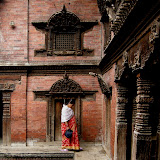
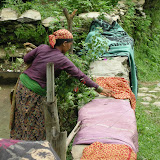
七月是尼泊尔的雨季高峰。每天清晨必从雨声中醒来,然后等着云慢慢升起,雨也变成了飘在风里的细丝,便可开始一天的活动了。大部分时间是雾蒙蒙的,看不到雪峰连绵的壮观景象。在山间小径前行,只有自己和旅伴,间或有一个衣着破旧却色彩鲜艳的农妇出现在雾中,感觉极其不真实,却又极其美丽。是的,即便在云雾笼罩的雨季,尼泊尔的色彩也令人难忘, 是妇人裙裾间的绛红,是阳光偶尔透过云缝射在山野中的翠绿。

尼泊尔人有少见的平和、友善,许多时候安静得仿佛是自然的一部分,深藏着某种与生俱来的笃定。这是否与他们的信有关?这信绝不仅是去寺庙烧香朝拜,去摸一下街角的铃铛,或是往额中眉间点一点红。这信不在行动中,却好象在不思考、不忧虑和不行动中。一个坐在石阶上的老人,如一尊雕塑,脸上看不出什么表情,好象世界和时间都与他无关。可是他忽然在你身后说一句短短的话,你奇怪地觉得他刚刚告诉了你一个秘密,一个有关一切人事变迁和斗转星移的秘密。

雨季中的尼泊尔是世外桃源。我们说好了再来,或者在明年春天, 来看喜玛拉亚的晴天, 看雪峰间的日出日落,想象中那一定会是终生难忘的。

(尼泊尔的两组照片在“透过我的镜头”中)

Back from Nepal, back to daily life with a dreamlike memory of the waters and hills in the monsoon Himalaya. Like the open sea and a harbour to a sail, the excitement of a journey and the calmness of a home are both invaluable to me.

The end of July was the peak of Nepal's monsoon season. Every morning we woke up to hear the rain drops knocking at the windows. As the clouds rose slowly with the temperature, the heavy shower gradually subsided to a mist. The snow-capped Himalayan peaks would still hide in the clouds, for days and weeks. Despite the weather, day trips to the top of nearby hills were very pleasant. On the winding trekking trails, the complete quietness and greenness enshrouded us. Nothing was heard but the footsteps of my travel companion and me. Occasionally in a distance, a local woman would appear in a worn but very colourful Nepali dress. This looked extremely unreal yet extremely beautiful. The colours of Nepal are unforgettable, in a grey backdrop of the foggy monsoon season. It was the dark red skirt a woman walked around in, or the bright green the hills exhibited under a thread of sunshine momentarily breaking through the clouds .

The Nepalis displayed a friendliness and calmness rarely seen in other peoples. Their presence was so peaceful that you took them as a natural part of their surroundings. There seemed to be a deep steadfastness that they were born with. Can I read this as a demonstration of their faith? Such a faith does not stop at stupas, street-corner bells or the redness Nepalis put on their foreheads. It does not manifest itself in actions, but in non action. An old man sat on a stone like a sculpture, motionless and expressionless, as if he was an outsider to the world and the time. However, when he murmured something as you walked past him, you had the strange feeling that he had just revealed a secret, a secret that carried an Answer to The Question.

Nepal in the monsoon is Shangri-la. We will come back to it, perhaps next spring, to see the fine days in Himalaya and to watch the sun rise over the snow peaks. That scene, I imagine, will stay with me as long as I live.

(Two sets of pictures from Nepal are in the section “Through My Lens”)

Tuesday, July 24, 2007

紫禁城里的星巴克 Starbucks in the Forbidden City

一个多星期前,在紫禁城里开了7年的星巴克关了,迫于大众舆论的压力。据说网上几十万人慷慨激昂、各抒己见,很多人认为故宫里开星巴克,是美国的消费文化直挑中国传统文化的底线, 不可容忍。就是星巴克最后连招牌也摘了,静悄悄的卖它的咖啡,也难逃此劫。一个外国平民大众的连锁咖啡馆落户曾经壁垒森严的古老皇家圣地,许多人看着不顺眼,似乎可以理解。毕竟星巴克与故宫是两个太鲜明的符号,很容易挑动一个正在重拾自信的民族的敏感神经,唤起它的集体记忆。

2000年星巴克受邀入驻故宫,虽也有非议之声,但远不及今日受关注的程度。或许人们已经开始从无休止的物欲中抬起了头,从一味崇洋从摆脱出来,开始审视生活中对传统与文化的需要。若果真如此,倒值得庆幸。怕的是对中国文化遗产未知一二,对如今金钱至上诚信全无的社会行为缺乏反思,只求一个脸面。 若是抓住一个并不张扬的星巴克不放,却对同在皇城的喧嚣得多的另一家咖啡店和午门内出售低劣商品的众多摊贩视若无睹,只因他们是自家人,那就有了幼稚的民族主义膨胀之嫌,缺乏泱泱大国的气度了。

About a week ago, Starbucks closed its shop in the Forbidden City in Beijing, submitting to the pressure from hundreds of thousands of Chinese blasting the Internet with protests. People fiercely voiced their intolence of a Starbucks in the Forbidden City. Most argued that such a humiliation to the Chinese cultural heritage lodged by American consumerism should not be allowed. Even in the end Starbucks took down its logo to quietly run its coffee business, it was still not left alone. It is understandable that many people feel uncomfortable about a foreign grassroot coffee chain taking a place in the ultimate royal palace that had been forbidden to all but the royal blood. Afterall, Starbuck and the Forbidden City are each too prominent a symbol, well representing the cultures that have produced them. Easily can they touch the sensitive nerves and trigger the collective memory of a nation that has suffered great humiliations from various foreign attackers in its modern history and of a nation that is regaining a pride and confidence with the brisk pace of economic development and wealth accumulation.

Interestingly, the very Starbucks shop was opened in the Forbidden City in 2000 upon inviation from the Palace Museum located inside. It had been in operation since. Although protests were heard from the start, the scale was far weaker than this time. Encouraging it is, if it sends a signal that more Chinese people are coming out of a restless materialistic pursuit, from a total devotion to getting rich, and from blindly embracing all that's foreign. Still encouraging, if people are starting to realize the important role their cultural heritage takes in their lives. However, when one sees that nobody had a word against another coffee shop inside the City, far more noisy and aggressive, or about the vendors selling subquality, tasteless souveniors along the City's major corridor, just because these are run by our own countrymen, one is inclined to believe that the protest again Starbucks is simply another act of "face-saving", an exhibition of naïve natioanlism that is not founded on a deep understanding of our own culture or on a sincere reflection of the recent social behaviours that had gone too far from such a cultural root.

Friday, July 13, 2007

石头、剪子、布 Rock, Paper, Scissors

中午偷闲到太子大厦的一家书店转转,在满架有关美国总统竞选的书中看到美国前副总统戈尔写的新书 The Assault on Reason。撇开书中对美国政治的分析和对现政府的抨击不谈,有个类比觉得有意思。他说恐惧、理性和信仰的关系就像儿时玩的游戏石头、剪子、布,恐惧破坏理性思维,理性挑战信仰的真实,而信仰征服恐惧心理。

说起石头、剪子、布,还很有几分亲切感,小时候最常用这个来决定某项优先权。无论你出石头、剪子还是布,都有可能赢,结果取决于对方出什么。玩儿着玩儿着,发现还有心理战术,可以根据上一局双方的出招猜测这一局对方最有可能出什么。 后来发现外地小孩儿也玩,然后发现外国人也玩儿。后来在商学院教授解释博奕论的时候,我又想起了这个童年的游戏。

我觉得这个游戏深具中国文化特色,甚至猜测它起源于中国,也确实听说在十九世纪的欧洲作品中提到它时候称之为“一种亚洲的游戏”。中国文化对各种力量之间彼此作用角逐最终达到平衡和谐的独特理解在这个游戏中颇得体现。传统的中国文化似乎不太看
重逻辑思维,所以也就不受A比B强,B比C强,所以A一定比C强这种逻辑的限制,灵活而通融。传统的中国人深谙一物降一物的道理,所以再强也懂得收敛。在中国经济飞速发展财富骤增的今天,在有些人开始忘乎所以忘了天高地厚在巴黎的名牌店里挺着大肚子颐指气使的今天,希望我们还能记起儿时玩过的这个石头、剪子、布的游戏。

Rock, Paper, Scissors

I snatched a moment during lunch break at a bookshop and browsed through a new book written by Al Gore titled The Assault on Reason. One analogy he made reminded me of a childhood game. He said, the relation among fear, reason and faith is similar to that of rock, scissors and paper. Fear displaces reason, reason challenges faith, and faith overcomes fear.

The game “rock, paper, scissors” touched the reminiscences of my younger days, when we used the game for all kinds of random selections. Rock, paper and scissors all had a chance to win, depending on what gesture the opponent decided to make. Having played more, I found the result was not always random because after a few rounds the opponent’s pattern of behaviour could be exploited. Later I found kids from other cities also played the same game, so did kids from other countries. Years later, it reappeared in my mind when I was sitting in the lecture on Game Theory at my business school.


Although played world-wide, this game exhibits a strong flavour of Chinese culture. I even suspect that it originated in China. Did I hear that it was labelled “an Asian game” in the works of European authors from the 19th century? The unique interpretation of rivalry and interaction among various forces and the hope for these forces to enter into a final state of balance and harmony form an important aspect of Chinese culture, quite vividly expressed in this game. It appears that traditional Chinese culture does not emphasis logic thinking, and is beneficially not restrained by the logic such as: A is stronger than B, B is stronger than C, and therefore A must be stronger than C. A traditional Chinese man understands too well that anybody has a natural enemy and can be vanquished; however strong, he always behaves modest and mild. At a time when China is experiencing brisk economic growth and fast accumulation of wealth, and at a time when some people get swollen-headed, forget the height of the heaven and the depth of the earth, I hope we can still remember this game everybody has played in his childhood. Rock defeats scissors, scissors defeat paper, but paper defeats rock.